
What Is Franchise Marketing? National Brand, Local Growth
If you've ever wondered what is franchise marketing , here's the short answer: it's the system that keeps a franchise brand recognizable nationwide while driving real customers through the doors of each individual location. It sounds straightforward, but the execution is anything but simple . Franchisors and franchisees share the same brand, yet they operate with different budgets, different local markets, and often different priorities.
That tension between corporate-level brand building and location-level customer acquisition is where franchise marketing lives. Get the balance right, and every location benefits from strong brand awareness paired with local visibility that actually generates revenue . Get it wrong, and you end up with a fragmented brand, wasted ad spend, or locations that can't compete in their own neighborhoods.
This article breaks down how franchise marketing works, what separates it from traditional marketing, and the strategies that connect national brand power to local growth. At Multi Web Team, we build and manage websites for multi-location businesses and franchises every day, so we've seen firsthand how the right local strategy compounds when it's backed by a consistent brand framework . We'll share that perspective throughout.
What franchise marketing is and how it works
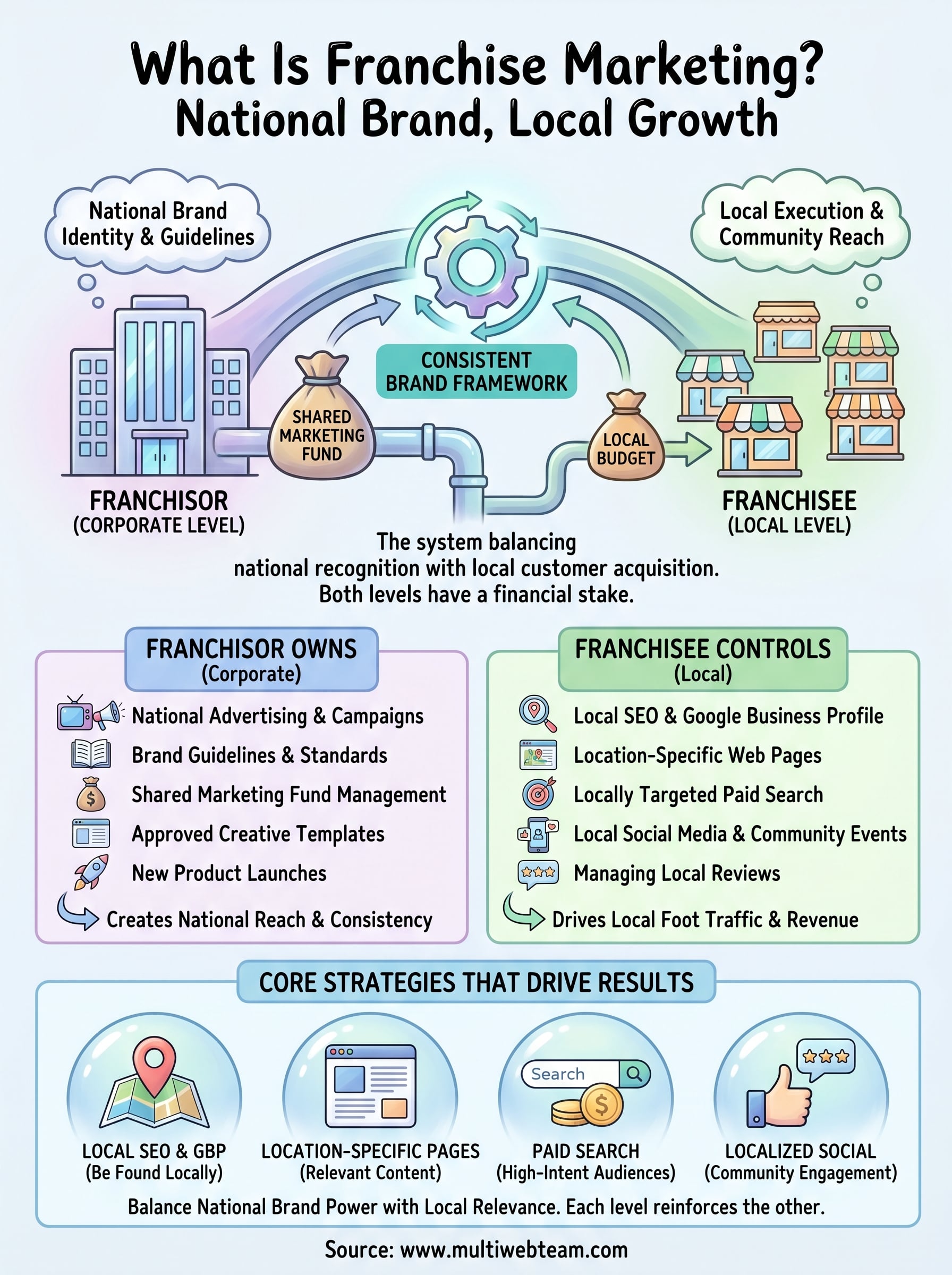
Understanding what is franchise marketing starts with recognizing that a franchise isn't one business, it's a network. You have a franchisor (the brand owner) setting the rules, the visual identity, and the overarching message. Then you have franchisees, individual operators who license that brand and run their own locations. Franchise marketing serves both levels at the same time, which creates a structure unlike any other type of business marketing.
The system works because both levels have a financial stake in how customers perceive the brand. If the national brand looks weak, every location suffers. If local locations deliver bad experiences, the national brand erodes. Marketing holds these two realities together by creating campaigns and tools that franchisees can deploy locally while staying inside a consistent brand framework the franchisor defines and enforces.
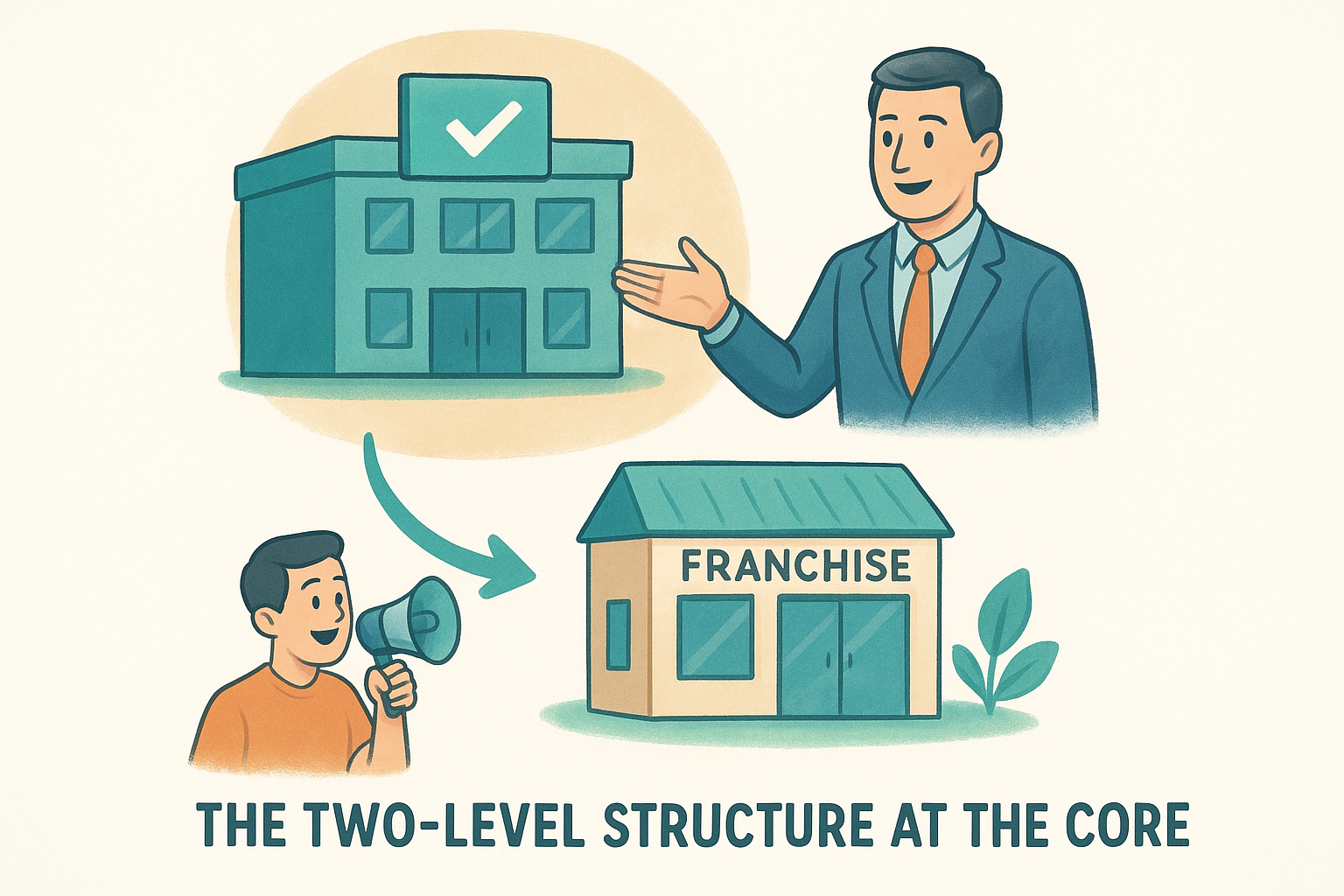
The two-level structure at the core
Most franchise marketing programs split responsibilities into two distinct tiers: corporate-level marketing run by the franchisor and local-level marketing executed by individual franchisees. At the corporate level, the franchisor handles national advertising, brand guidelines, messaging standards, and typically a shared marketing fund that pools contributions from every franchisee in the network. That pooled fund creates national reach that no single location could afford independently.
The shared fund model is why franchise brands can run national TV campaigns, large-scale digital advertising, and synchronized promotional pushes across hundreds of locations at once.
At the local level, franchisees use tools the franchisor provides, such as approved ad templates, local SEO assets, and social media guidelines, to reach customers in their specific market. You might run a promotion tied to a community event or spotlight an offer that resonates strongly in your region. The goal is that your local activity amplifies the national investment rather than pulling against it, which keeps the brand unified while staying relevant to local audiences .
How money moves through franchise marketing
Marketing fund contributions from franchisees typically run between 1% and 4% of gross sales, though the exact percentage depends on your franchise agreement. The franchisor collects these contributions, pools them, and deploys the budget on behalf of the entire network. Beyond that shared fund, franchisees carry their own local marketing budgets that they control independently to run location-specific campaigns.
This two-budget structure directly shapes what you control versus what corporate controls. Knowing where your dollars go and which marketing decisions belong to you is the foundation for building an effective strategy at the local level.
How franchise marketing differs from traditional marketing
A single-location business controls every marketing decision from top to bottom. The owner picks the message, sets the budget, chooses the channels, and adjusts the strategy whenever the numbers call for it. What is franchise marketing , by contrast, is a shared responsibility model where brand decisions follow a defined chain of authority, not individual preference. That fundamental difference changes how you plan, spend, and measure results.
When you operate within a franchise, your marketing freedom is real but bounded, and that boundary is what protects the brand equity every location depends on.
Brand standards limit your creative range
In traditional marketing, you can rebrand, shift your tone, or run an unconventional campaign with no approval process in the way. As a franchisee, brand guidelines set the boundaries for every piece of marketing you produce. Colors, fonts, taglines, and brand voice are predetermined. Your job is to apply those standards consistently at the local level , not to reinvent them.
This structure exists for a clear reason. Every location that stays on-brand reinforces the same associations in customers' minds, which makes the national ad spend more efficient and your local campaigns more credible by association.
Shared accountability changes your incentives
Traditional business owners market exclusively for their own bottom line. In a franchise, your local marketing results affect the whole network's perception , and the national brand's performance directly shapes your foot traffic. That shared accountability pushes franchisees toward strategies that balance personal ROI with network health , a consideration that simply doesn't exist outside a franchise structure.
This difference shapes everything from how you spend your local budget to how aggressively you can experiment with promotions or messaging .
Who handles what in franchise marketing
One of the most practical questions behind what is franchise marketing is figuring out who owns each piece. Splitting responsibilities clearly between the franchisor and franchisee prevents both wasted effort and brand inconsistencies that undermine the whole network.
What the franchisor owns
The franchisor controls everything that shapes the brand's identity at scale . That includes national advertising campaigns, the brand style guide, approved vendor relationships, and the marketing fund. The franchisor also sets the rules around what franchisees can and cannot produce independently, which protects brand consistency across every location in the network.
When the franchisor defines brand standards clearly, every franchisee operates from a stronger foundation rather than guessing what's acceptable.
Common franchisor responsibilities include:
- National and regional ad campaigns
- Brand guidelines and approved creative templates
- Marketing fund management and reporting
- Website infrastructure and domain strategy
- New product or promotion launches
What the franchisee controls
Your role as a franchisee centers on local execution within the guardrails the franchisor sets. You control how you deploy your local marketing budget, which community events you sponsor, and how you respond to local reviews and customer feedback. Local SEO , location-specific social media, and neighborhood promotions all sit squarely in your court.
This split works best when you treat local marketing as a complement to the national investment rather than a replacement for it. Choosing channels like Google Business Profile optimization and locally targeted paid search lets you reach customers who are ready to visit your specific location without conflicting with the brand messaging corporate has already established.
Core strategies that drive national and local results
Understanding what is franchise marketing in practice means knowing which specific tactics move the needle at both levels. The strongest franchise marketing programs don't treat national and local as separate campaigns; they design strategies where each level reinforces the other and every dollar spent produces compounding returns across the network.
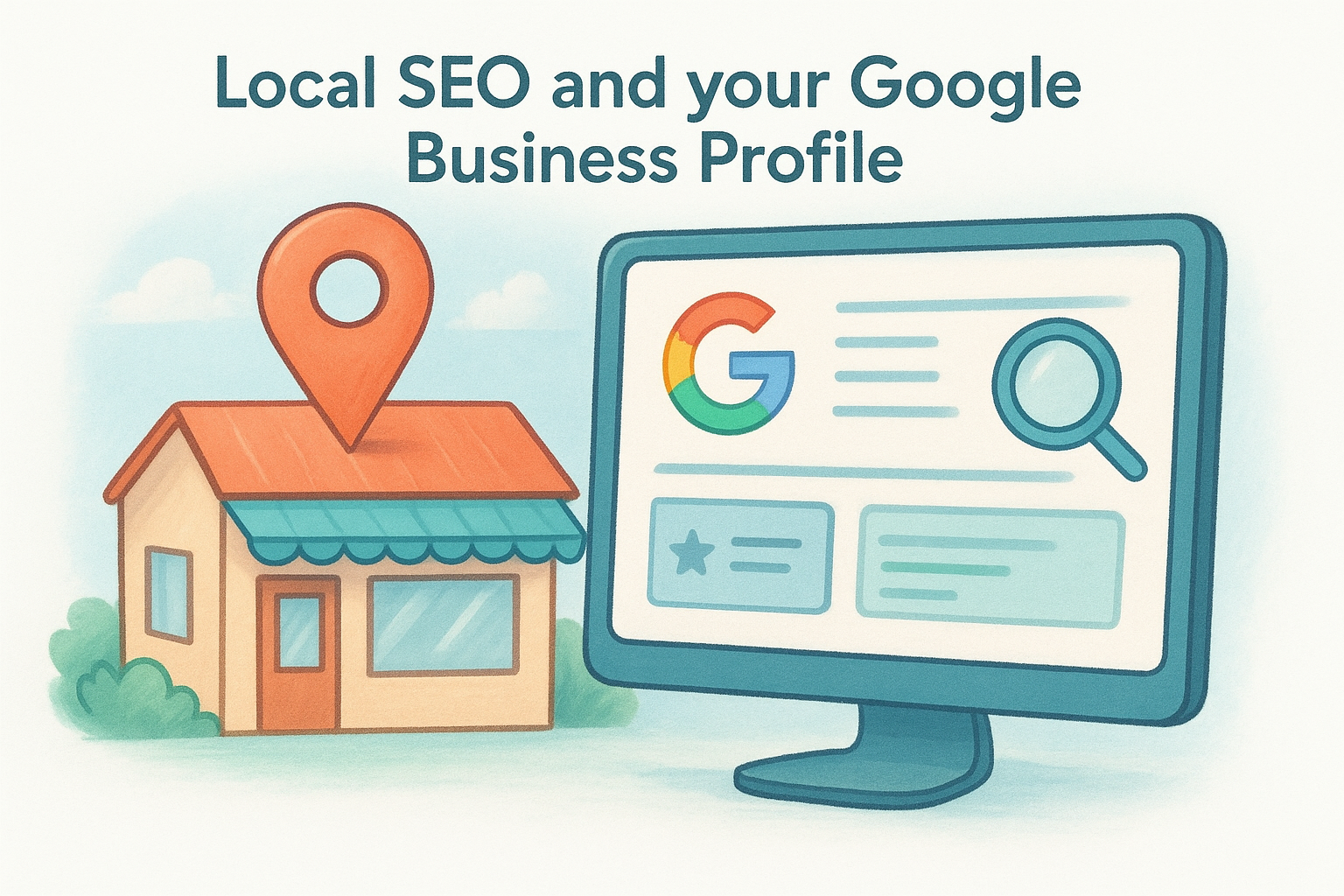
Local SEO and your Google Business Profile
Local search optimization is the single highest-leverage activity most franchisees can control independently. When someone searches for your type of business near them, a complete and accurate Google Business Profile dramatically increases your chances of appearing in the local pack at the top of results. Keeping your hours, address, photos, and reviews current is not optional maintenance; it directly determines whether local customers find your location or a competitor's.
A franchisee who actively manages their Google Business Profile and builds location-specific web pages captures local demand that national brand advertising alone cannot reach.
Your website also needs location-specific pages with content that reflects your city, neighborhood, or region. Generic content shared across all locations rarely ranks well in local search, and it gives potential customers no reason to choose your specific location over another.
Paid search and localized social
Locally targeted paid search campaigns let you bid on keywords that match exactly what nearby customers are searching for, putting your location in front of high-intent audiences at the moment they're ready to act. Pair that with localized social media content that highlights community involvement, seasonal promotions, or location-specific offers, and you build an audience that national campaigns alone never develop.
Both channels work best when your messaging stays inside the brand guidelines the franchisor has already established.
How to build a franchise marketing plan that scales
Building a scalable franchise marketing plan starts with mapping what already exists before you add anything new. Part of understanding what is franchise marketing means recognizing that corporate already funds and runs a layer of marketing on your behalf. Before you spend a dollar of your local budget, audit what the franchisor provides: approved templates, national campaigns, brand guidelines, and your existing website structure. Knowing what you already have prevents duplication and reveals the gaps only you can fill .
Your local plan works best when it builds on the national foundation rather than trying to replace it.
Define your local priorities
Your local plan should focus on channels where you have direct control and a measurable return . Local SEO, your Google Business Profile, and location-specific web pages sit at the top of that list. Write down which neighborhoods you serve and what makes your location relevant to customers nearby. Those answers drive every content and advertising decision that follows.
Key priorities for your local marketing plan:
- Optimize and maintain your Google Business Profile
- Build location-specific landing pages on your website
- Run locally targeted paid search campaigns
- Engage with local reviews and community events
Set a budget and measure results consistently
Assign a specific monthly amount to each tactic you plan to run. Track results from each channel separately so you can see exactly where your local spend produces real customers . Review performance monthly, cut what underperforms, and reinvest in what works.
Scaling a franchise marketing plan is not about adding more tactics. It's about running the right channels consistently and adjusting based on real data. The franchisees who grow fastest treat their local budget as a tool that gets sharper with every monthly review , not a fixed line item they set and forget.
Key takeaways and next steps
What is franchise marketing comes down to one core challenge: balancing national brand recognition with real foot traffic at each individual location. The franchisor sets brand standards, funds national campaigns, and provides the tools. You control local execution through SEO, your Google Business Profile, location-specific web pages, and targeted paid search. Neither level works as well without the other.
Your next move is to audit what you currently have before adding anything new. Check your location pages, review your Google Business Profile, and identify the gaps your local budget should fill. If your website isn't built to support local search visibility across multiple locations, that's the starting point. Multi Web Team designs and manages websites built specifically for franchises and multi-location businesses, so you can focus on running your locations while your web presence works for you.