8 Franchise Marketing Best Practices for Local Growth
Running a franchise means juggling two competing priorities: keeping the brand consistent across every location while giving each one room to connect with its local market. Get that balance wrong, and you either dilute the brand or suffocate the local stores. Get it right, and growth compounds. That's exactly why understanding franchise marketing best practices matters, they give you a framework for scaling marketing efforts without losing what makes each location relevant to its community.
The challenge most franchise owners run into isn't a lack of ideas. It's execution. Who handles local SEO? How do you keep promotions updated across dozens of location pages? How do you maintain quality when your team is already stretched thin? At Multi Web Team, we work with multi-location businesses and franchises every day, building and managing websites that support local visibility while keeping the brand experience unified across all locations. We see firsthand what works and what doesn't.
This article breaks down eight practices that drive real local growth for franchise businesses. Each one is actionable, proven, and built around the reality of managing marketing across multiple locations , not theory from someone who's never had to coordinate a brand rollout across ten different cities.
1. Centralize your franchise website and updates
Your website is the one marketing asset you fully control. Social platforms shift their algorithms, ad costs fluctuate, and directories come and go, but your website stays consistent. Centralizing it across all locations is the foundation that makes every other franchise marketing best practice work, and it's the first place to get right before investing heavily elsewhere.
Why the website is the hub for local growth
Every customer who finds your franchise, whether through a search, an ad, or a referral, will likely land on your website before walking through the door. A centralized website gives you direct control over how every location presents itself, from the offers displayed to the messaging used. When updates live in one place, you eliminate the risk of outdated content sitting on neglected location pages.
A centralized website means you fix a pricing error or launch a promotion once, and every location benefits immediately.
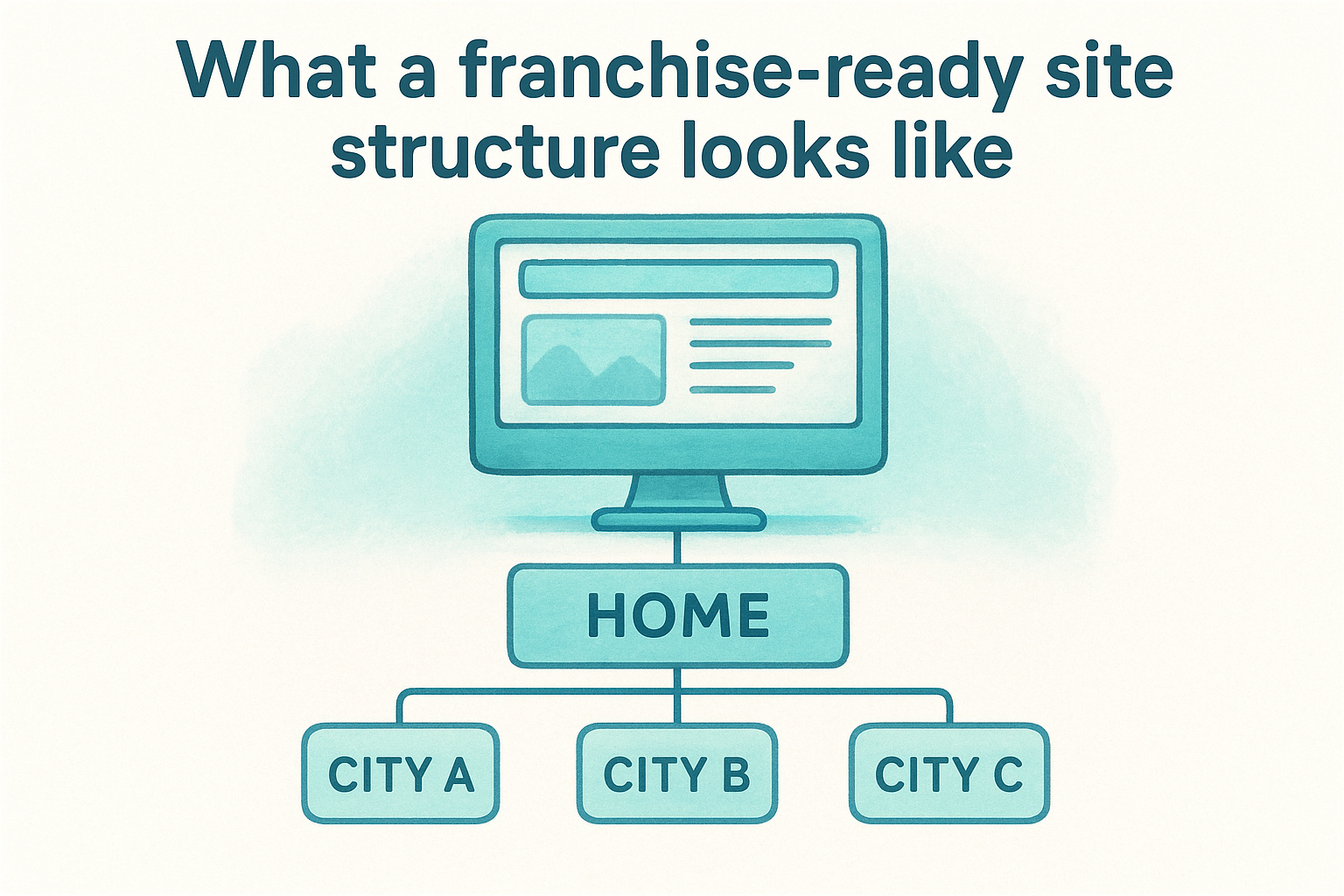
What a franchise-ready site structure looks like
A franchise-ready site uses a parent-child URL structure , typically something like yoursite.com/locations/city-name, so each location gets its own page while sitting under the same domain. This structure passes domain authority down to individual location pages, helping them rank in local search results without those pages competing against the corporate site or each other.
How Multi Web Team supports multi-location franchises
Multi Web Team builds and manages websites specifically for multi-location businesses and franchises . The subscription model means you get unlimited updates across all location pages without paying per change or managing a developer. When a promotion changes or a new location opens, the team handles it, so you focus on running the business instead of coordinating website edits.
Key metrics to track from the website
Once your site is structured correctly, tracking performance becomes straightforward. Focus on organic traffic by location page , conversion rate from location page visits to calls or direction requests, and page load speed. These three numbers tell you whether your site is pulling its weight in local markets. Use Google Search Console to monitor which location pages rank and where you are losing impressions to competitors.
2. Enforce brand consistency without killing local relevance
Brand consistency and local relevance are not opposites. The goal is to lock down the elements that define your brand while opening the door on anything that helps a specific location connect with its neighborhood. That distinction is one of the most practical franchise marketing best practices you can put into operation.
What to standardize at the brand level
Your logo, color palette, typography, and core messaging should be non-negotiable across every location. Create a brand guide that specifies exact usage rules and share it with every franchisee before they touch any marketing materials.
Standardizing your core brand elements means customers recognize you instantly, regardless of which location they visit.
Where franchisees should localize content and offers
Local promotions, community events, and neighborhood-specific offers are where franchisees should have room to operate. A location near a college campus can run a student deal. A suburban location can promote family packages. These adjustments increase relevance without touching your brand identity.
How to approve and publish local marketing fast
Build a simple approval workflow using shared templates that franchisees fill in. When the creative guardrails are already built into the template, approval becomes a quick review rather than a full redesign process. Speed here keeps franchisees from going rogue with off-brand materials.
Common consistency problems and how to prevent them
The most common issues are outdated logos on social profiles and mismatched offers across location pages. Run a quarterly audit across all locations and use a central website platform so content updates push to every page simultaneously, eliminating version drift before it damages the brand.
3. Build location pages that rank and convert
A location page is not just a map embed and a phone number. Each page needs to work as a standalone landing page that serves both search engines and real customers. When done right, this is one of the most impactful franchise marketing best practices you can implement because it multiplies your local search visibility across every market you operate in.
The must-have elements on every location page
Every location page needs a unique, location-specific title tag and H1 heading , along with the full street address, phone number, and hours , plus a description of services available at that specific location. Include photos of the actual space when possible to build trust before a customer walks in.
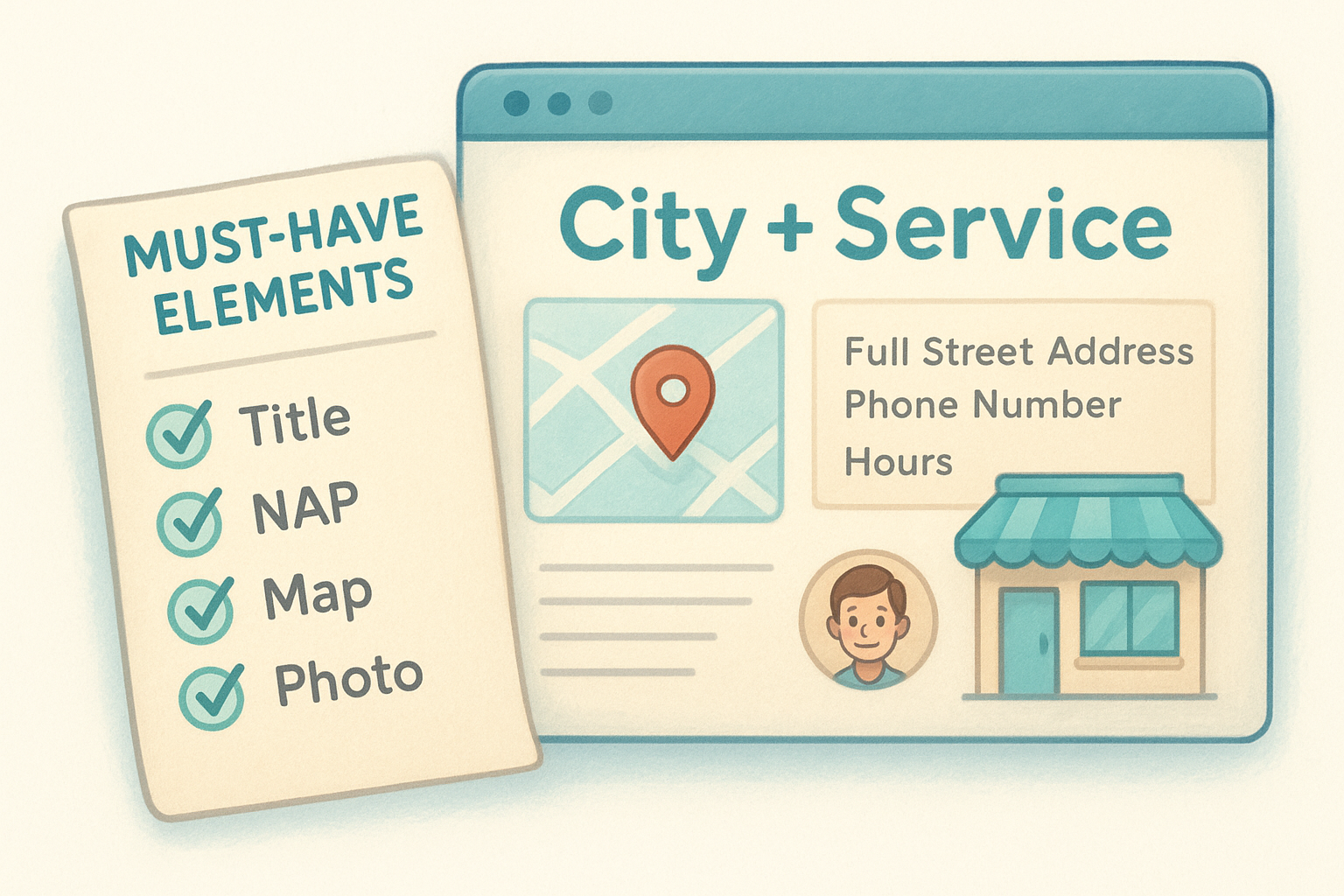
- Unique title tag with city and service name
- Full NAP (name, address, phone number)
- Embedded Google Map
- Location-specific hours and service list
- Local team or manager bio when applicable
How to optimize for local SEO across many locations
Each page should target location-specific keywords naturally within the body copy, not forced into headings. Link your location pages to and from the Google Business Profile for that location to reinforce local relevance signals with search engines.
Your location pages and your Google Business Profile work best when they point to each other and share consistent information.
How to prevent duplicate content at scale
Copying the same body text across every page triggers duplicate content problems that hurt your rankings. Write a unique introductory paragraph for each location that references the neighborhood, nearby landmarks, or local context specific to that market.
Conversion elements that turn visits into leads or visits
Place a clear call-to-action above the fold on every location page. A click-to-call button, an online booking link, or a direction request button gives customers an immediate next step and turns page traffic into real business outcomes .
4. Own local listings and keep your NAP data clean
Your business listings are often the first thing a customer sees before they ever land on your website. For franchises, inconsistent listing data across dozens of directories quietly damages your local search rankings and erodes customer trust at scale, making this one of the most overlooked franchise marketing best practices.
Why listings matter for franchises
Search engines treat NAP data (name, address, phone number) across directories as a trust signal. When your listings are consistent, search engines verify you as a real, established business and reward each location with stronger local pack visibility . When the data conflicts, rankings drop and customers end up at the wrong address.
Consistent listings across directories reinforce the local SEO work you put into your location pages and multiply the return on both.
What to audit across Google, Apple, Bing, and major directories
Start with Google Business Profile and Bing Places since those feed the most common search results. Then check Apple Maps, Yelp, and major data aggregators. Confirm that the business name, address, phone number, and hours are identical across every platform for every location.
How to handle duplicates, merges, and practitioner listings
Duplicate listings split your review equity and confuse search engines about which listing to surface. Claim every duplicate through the platform directly, then request a merge or deletion. For franchise models, keep practitioner listings (individual staff profiles) separate from the main location listing to avoid cannibalizing your primary rankings.
Ongoing maintenance rules franchisees can follow
Give franchisees a simple quarterly checklist that covers hours updates, photo refreshes, and review responses . Centralizing ownership of the core listing at the corporate level prevents franchisees from accidentally editing critical NAP fields while still letting them manage the customer-facing content that builds local engagement.
5. Run paid ads with tight territory control
Paid advertising amplifies your strongest franchise marketing best practices by putting your locations in front of customers who are actively searching . Without structure, though, franchisees running their own campaigns end up bidding against each other, inflating costs and confusing customers who see two ads for the same brand side by side.
How to structure campaigns for multi-location brands
Each location should run under a single Google Ads account managed at the corporate level, with separate campaigns or ad groups per location . This structure gives you full visibility across all locations while preventing overlapping bids that drive up your cost per click unnecessarily.
Geo-targeting rules that prevent franchisee overlap
Set geographic radius targeting for each location based on its actual service area, not just a zip code. Use location exclusions to prevent one franchise location from showing ads inside a neighboring franchisee's defined territory.
Tight geo-targeting keeps your ad spend focused on the right customers and protects each franchisee's territory from internal competition.
Landing pages and offers that work for local intent
Send paid traffic to the dedicated location page for that specific market, not the homepage. Customers searching for your service in a particular city expect to land on a page that confirms you serve their area with relevant hours, local offers, and direct contact options.
Budget guardrails and reporting franchisees can understand
Set minimum and maximum daily budgets at the corporate level and share a simplified monthly report showing each location's cost per lead and conversion rate . Keep the report to a single page so franchisees can act on the data without needing a marketing background to interpret it.
6. Use lifecycle messaging to drive repeat visits
Getting a customer through the door once is only half the job. Email and SMS messaging keeps your franchise locations connected to customers between visits, making lifecycle messaging one of the most cost-effective franchise marketing best practices for driving repeat revenue without increasing your ad spend.
What to send in email and SMS for local revenue
Promotional offers, appointment reminders, and loyalty rewards are the core messages that move local customers back through your door. Keep each message short, direct, and tied to a specific location so recipients feel the message applies to them rather than a generic brand broadcast.
How to segment by location, service, and customer behavior
Segment your list by location and purchase frequency so each message reaches the right audience at the right time. A customer who last visited three months ago needs a different message than someone who came in last week.
Segmenting by location means your messaging stays relevant to each customer's actual experience with your brand.
Automations to set up for franchises
Set up a welcome sequence and a win-back campaign at the corporate level so every franchisee benefits from consistent follow-up without building automations from scratch. These two flows recover a meaningful share of lapsed customers and run without requiring your team's daily attention.
Compliance and deliverability basics to protect the brand
Follow CAN-SPAM and TCPA requirements for all email and SMS sends across your franchise network. Maintain clean contact lists by removing hard bounces and honoring opt-outs immediately to protect your sender reputation at scale.
7. Publish local content that customers actually need
Consistent content publication is one of the franchise marketing best practices that separates locations with strong local visibility from those relying entirely on paid traffic. When you publish content that answers real questions your local customers ask, you build organic search visibility and earn trust before someone ever calls or visits.
Content types that drive local discovery and trust
Local service pages, neighborhood guides, and seasonal promotions are the content types that attract customers who are actively searching for what you offer nearby. A blog post about a local event your franchise sponsored or a page explaining your services in a specific district gives search engines fresh, location-specific signals that improve your rankings over time.
Publishing content tied to real local context earns more trust than generic brand announcements pushed to every location simultaneously.
How to build a shared content calendar with local slots
Build a corporate content calendar that reserves specific slots for local contributions each month. Assign franchisees two to three locally relevant topics per quarter so they know exactly what to write without spending time brainstorming off-brand ideas.
On-page and on-GBP content best practices
Update your Google Business Profile posts at least twice per month with current offers, photos, and announcements. Keep your location page content aligned with those GBP updates so customers see the same message regardless of where they find you.
Simple ways franchisees can contribute without going off-brand
Give franchisees a short content brief template that outlines the approved topic, target keyword, and word count. This structure lets them write in their own voice while keeping every piece within your brand standards and quality expectations.
8. Measure performance with a simple systemwide scorecard
Without clear numbers , you can't tell which franchise marketing best practices are working or which locations need attention. A simple scorecard gives every stakeholder a shared view of what's happening across the network without requiring a data analyst to interpret the results.
The few metrics that matter for local franchise growth
Track organic traffic per location page , Google Business Profile actions (calls, direction requests, and website clicks), and conversion rate from location page visits to customer actions. These three numbers cover visibility, intent, and outcomes without burying your team in data they won't use.
How to connect marketing activity to real outcomes
Link each marketing channel directly to a measurable result. Paid ad spend should connect to tracked calls or form submissions, and email campaigns should tie to redemption rates or appointment bookings. When each activity has a clear outcome attached, you spend on what works and cut what doesn't.
Tying every marketing activity to a real outcome stops budget from disappearing into channels that look active but produce nothing.
How to compare locations fairly across markets
Not every market is the same size, so normalize your metrics by market opportunity rather than comparing raw numbers. Use cost per lead and conversion rate as your primary comparison points so a smaller location in a competitive market gets a fair reading against a high-volume location elsewhere.
Reporting cadence and what to do with the insights
Send a monthly one-page report to franchisees showing their key metrics alongside the network average. Use quarterly reviews to identify underperforming locations, investigate the root cause, and adjust tactics before small gaps grow into serious problems.
Next steps
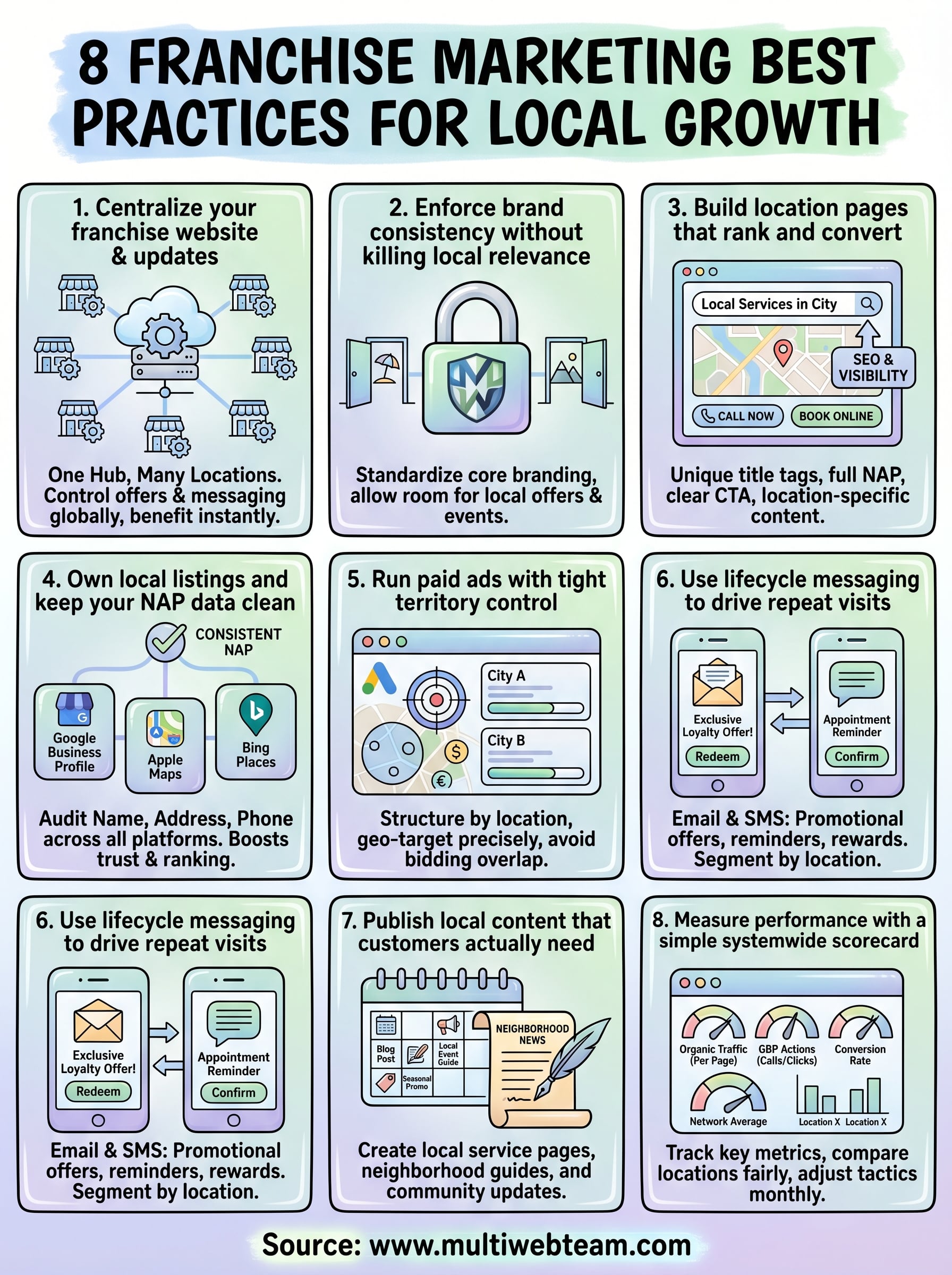
These eight franchise marketing best practices give you a clear path from scattered, inconsistent efforts to a system that drives growth at every location. Start with your website structure and location pages since those form the base everything else builds on. Then work through listings, paid ads, lifecycle messaging, content, and measurement as your capacity allows. You don't need to tackle all eight at once, but each one you add strengthens the others.
The biggest barrier most franchise owners face is not knowing what to do. It's finding time to execute while running the actual business. That's exactly the gap a dedicated web team fills. If you want a website that's already structured for multi-location growth and backed by ongoing management, reach out to Multi Web Team to see how we support franchises that need results without adding more to their plate.