7 Monthly Website Maintenance Plans: Pricing Compared (2026)
Your website doesn't stop needing attention after it launches. Broken links, security patches, plugin updates, content changes, skip these long enough and your site becomes a liability instead of an asset. That's exactly why monthly website maintenance plans have become a standard operating expense for businesses that depend on their websites to bring in customers. But with dozens of providers offering wildly different packages, figuring out what you should actually pay , and what you should get for that money, takes real comparison shopping.
At Multi Web Team, we build and manage websites for multi-location businesses and franchises on a subscription model that bundles design, updates, and SEO into one monthly fee. So we know this space well. We know what matters in a maintenance plan, what's filler, and where companies tend to overpay for services they don't need. We also know that businesses with multiple locations have maintenance demands that most basic plans simply don't cover.
This article breaks down 7 monthly website maintenance plans available in 2026 , comparing their pricing, included services, and the types of businesses they're best suited for. Whether you're running a single storefront or managing a growing franchise, you'll walk away knowing what to look for and what to avoid.
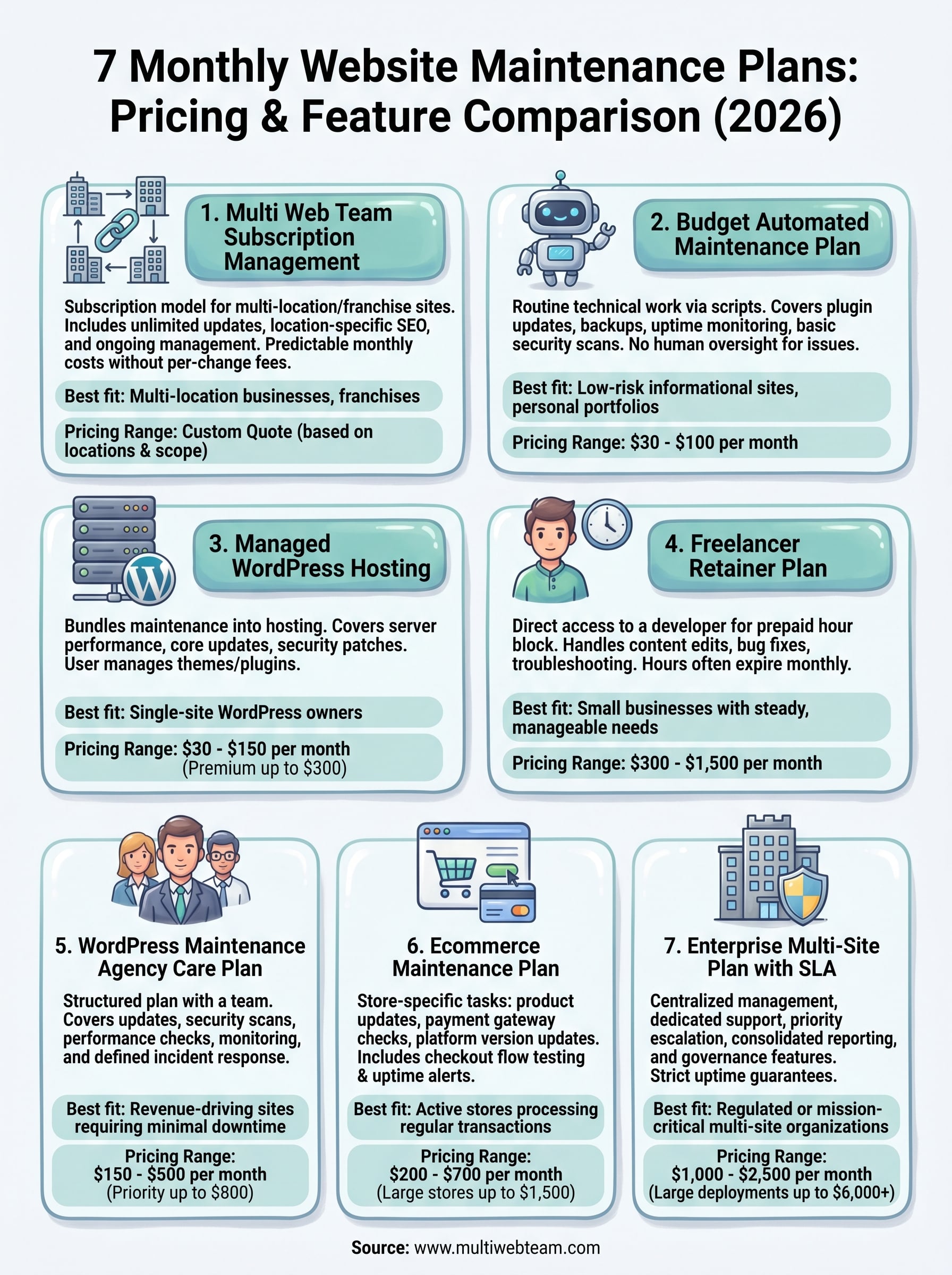
1. Multi Web Team subscription website management
Multi Web Team operates on a subscription model that covers your website design, ongoing management, and SEO under a single recurring fee. Unlike plans that charge per update or bill you hourly for changes, this structure gives multi-location businesses and franchises predictable monthly costs with no surprise invoices for routine work.
What you get each month
Each month, your subscription covers unlimited website updates , including content changes, photo swaps, promotional banners, and video additions. The service also includes ongoing website maintenance tasks like security monitoring, performance checks, and technical upkeep. You submit a request, and the team handles it without counting hours or sending extra charges.
Multi-location and franchise SEO coverage
This is where Multi Web Team separates itself from most monthly website maintenance plans. The subscription includes location-specific SEO optimization , so each of your locations gets treated as its own presence in local search rather than getting lumped under one generic site. The team builds out and maintains location pages optimized for geographic search terms , which matters significantly for franchise operators competing in multiple markets.
Multi-location SEO requires ongoing attention, not a one-time setup. Each location's rankings shift as competitors adjust and search algorithms update, so active monthly management makes a measurable difference.
Update process and turnaround times
You submit update requests directly to the team, and changes are handled without requiring you to log in to a backend or manage any technical tasks yourself . Turnaround times for standard content updates are typically fast, and the process is designed so that non-technical business owners can request changes in plain language without needing to understand how the site is built.
Typical 2026 pricing range
Multi Web Team uses a subscription pricing structure that is custom-quoted based on the number of locations and the scope of services needed. This makes it a stronger fit for businesses with multiple sites than flat-rate plans that charge per location as an add-on. Pricing discussions happen directly with the team based on your specific situation.
Best fit and deal-breakers to confirm
This plan is built for multi-location businesses and franchise operators who want a complete external web team without the cost of hiring in-house staff. If you run a single simple site with minimal update needs, the subscription model may be more than you require. Confirm that your update volume and SEO needs justify the recurring investment before signing on.
2. Budget automated maintenance plan
Budget automated maintenance plans handle the routine technical work on your site through scripts and scheduled tools rather than a dedicated human team. These are among the most widely advertised monthly website maintenance plans you'll find online, and they tend to appeal to small business owners who want basic coverage without a large recurring fee.
What you usually get
Most automated plans cover plugin updates, automated backups, uptime monitoring, and basic security scans . Some include a monthly report that summarizes the tasks the system ran. The work happens on a schedule, and you rarely need to log in or communicate with anyone to keep things running.
Common gaps that create surprise costs
Automated tools don't make judgment calls. If a plugin update breaks your layout or a backup file corrupts , no one is watching in real time to catch it. Fixing those problems often requires a separate support ticket or an hourly charge that isn't included in your base fee.
Automation handles repetitive tasks well, but it can't diagnose why your contact form stopped working or why your site slowed down after an update.
Typical 2026 pricing range
Budget automated plans typically run $30 to $100 per month depending on the platform and included features. Some managed hosting providers bundle similar functionality into plans starting around $25 per month.
Best fit for low-risk sites
This tier works for informational brochure sites or personal portfolios that don't process payments, handle sensitive data, or depend on daily traffic for revenue.
Questions to ask before you choose this tier
Ask specifically what happens when an update breaks something and whether human review is part of the plan or billed separately.
3. Managed WordPress hosting with maintenance included
Several hosting companies bundle WordPress maintenance tasks directly into their hosting plans, which can simplify billing and reduce the number of vendors you manage. These plans position themselves as an all-in-one solution, but the line between what the host controls and what you're still responsible for is often less clear than the marketing suggests.
What the host handles vs what you still own
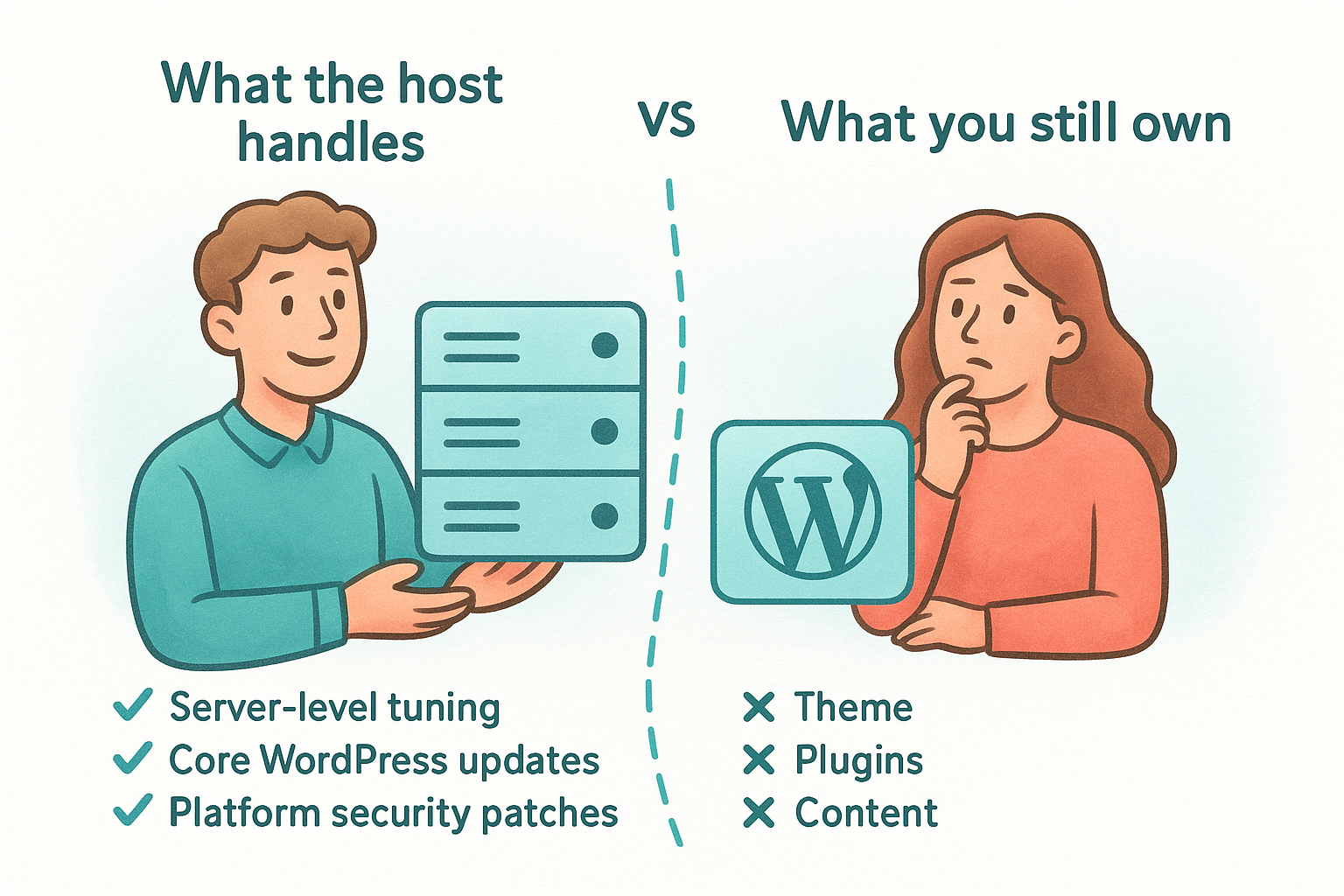
Managed WordPress hosts typically handle server-level performance tuning, core WordPress updates, and platform security patches . What they don't handle is your theme, your plugins, or your content. If a third-party plugin conflicts with an update, that problem lands back on you unless you've paid for a higher support tier.
Backups, staging, and rollback expectations
Most managed hosts include daily automated backups and a staging environment where you can test changes before pushing them live. Rollback availability varies widely, with some plans offering 30-day restore windows and others limiting you to the last 7 days. Confirm the retention period in writing before you commit.
A staging environment is only useful if you actually use it before deploying changes to a live site.
Typical 2026 pricing range
Managed WordPress hosting plans with maintenance features typically run $30 to $150 per month depending on traffic limits, storage, and support response times. Premium tiers with dedicated support can reach $300 per month.
Best fit and main risks
This setup works well for single-site WordPress owners who want technical hosting concerns handled without hiring a separate agency. The main risk is assuming the host covers more than it actually does.
Questions to ask before switching hosts
Ask specifically what support is included when a plugin breaks and whether content updates or SEO work fall within the plan or require a separate monthly website maintenance plan or add-on service.
4. Freelancer retainer maintenance plan
A freelancer retainer gives you direct access to a specific developer each month for a fixed fee. You prepay for a block of hours, and the freelancer applies them to whatever maintenance tasks you send over , making this one of the more personal options among monthly website maintenance plans.
How retainers work month to month
Each month, you pay for a set number of hours , typically 5 to 20, and submit work as needed. Most freelancers roll unused hours over for one month only before they expire , so planning your update schedule in advance keeps you from losing what you've already paid for.
What maintenance tasks typically consume the hours
Content edits, bug fixes, and plugin troubleshooting eat through hours faster than most clients expect. A single broken integration can consume three to five hours , leaving little room for anything else in that billing cycle.
Freelancers bill for actual time, so one complicated fix can drain your retainer before your routine updates get handled.
Typical 2026 pricing range
Freelancer retainers typically run $300 to $1,500 per month , depending on the developer's experience and the number of hours included. Rates for senior WordPress developers or those with specialized platform knowledge lean toward the higher end of that range.
Best fit for small sites with frequent requests
This model suits small businesses with steady but manageable update needs and a preference for working with one person directly. If your site drives significant revenue, relying on a single freelancer without backup coverage introduces meaningful downtime risk when that person is unavailable.
How to structure the scope to avoid conflicts
Before work starts, document which specific tasks count against your hours and which fall outside the agreement entirely. Define response time expectations in writing so both sides know what happens when something urgent comes up mid-month.
5. WordPress maintenance agency care plan
WordPress maintenance agencies offer structured care plans built around keeping your site secure, updated, and running well month after month. Unlike a freelancer, an agency gives you a team behind your site rather than a single person, which reduces the risk of being left without support when something breaks at the worst possible time.
What you should expect in a professional plan
A professional agency care plan should cover plugin and theme updates, core WordPress updates, security scans, and regular performance checks as standard line items, not optional add-ons. You should also receive a monthly report that shows what was done, not just a vague confirmation that "maintenance ran."
Security, monitoring, and emergency response
Agency plans worth paying for include real-time uptime monitoring and malware scanning , with a defined process for what happens when a threat is detected. Ask whether emergency response is included in your base fee or billed separately, because that distinction matters the moment your site goes down on a Friday night.
Incident response is where the gap between budget plans and professional monthly website maintenance plans becomes most visible.
Typical 2026 pricing range
Agency care plans typically run $150 to $500 per month for standard WordPress sites. Plans with faster response times, dedicated support, and priority access to developers push toward the $400 to $800 range .
Best fit for revenue-driving sites
This model fits businesses whose websites directly generate leads or sales and cannot afford extended downtime or unresolved technical issues.
Contract terms to review before signing
Confirm what counts as an emergency and whether your plan includes a guaranteed response window. Also verify whether content updates are included or if those require a separate agreement.
6. Ecommerce maintenance plan for online stores
Ecommerce sites carry maintenance risks that standard plans aren't built to handle. When your store goes down or checkout breaks, you lose revenue in real time, which means your maintenance plan needs to match the actual stakes of running an active online store.
Store-specific maintenance tasks to require
Your plan should include product catalog updates, payment gateway compatibility checks, and platform version updates as standard items. WooCommerce, Shopify, and similar platforms push regular updates that can break custom functionality if no one is actively testing after each release.
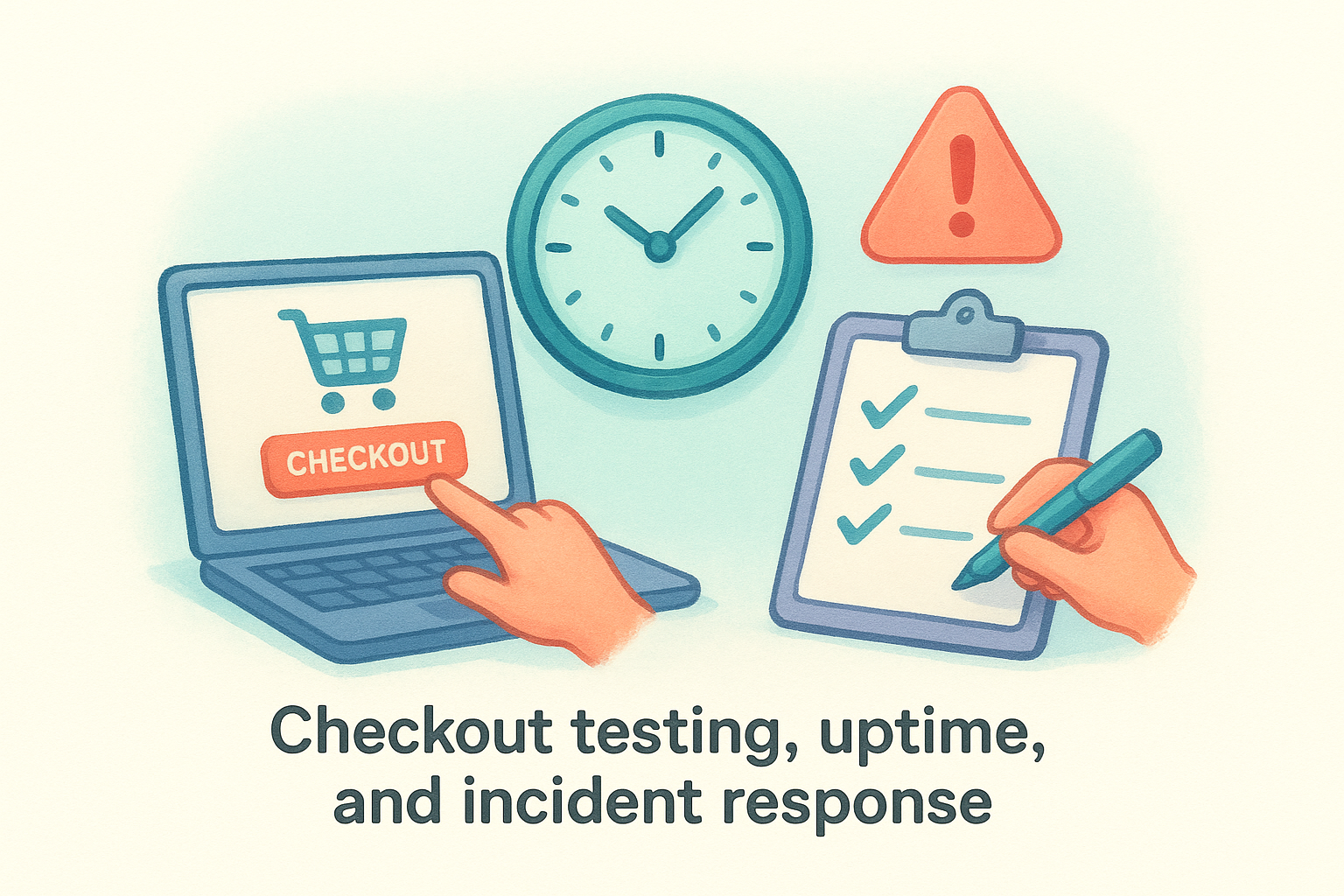
Checkout testing, uptime, and incident response
Checkout flow testing should happen after every significant update, not just when something appears broken. Your plan should define uptime monitoring with alert thresholds and specify exactly who responds when an incident occurs and how quickly they're expected to act.
An ecommerce site that goes down for two hours during peak traffic can cost more than a full year of maintenance fees.
Typical 2026 pricing range
Ecommerce monthly website maintenance plans typically run $200 to $700 per month for mid-size stores. Larger stores with custom integrations or high transaction volumes push into the $800 to $1,500 range depending on the incident response coverage included.
Best fit for WooCommerce and other platforms
This tier fits active stores processing regular transactions that cannot absorb downtime or checkout failures without direct financial consequences. If your store sits mostly inactive, a lower-cost plan likely covers your actual needs.
Questions to ask about payment and data risk
Ask your provider how they handle PCI compliance considerations and whether your plan includes any security audit coverage for payment processing vulnerabilities specifically.
7. Enterprise multi-site plan with SLA
Enterprise plans are a category where the label gets applied loosely. Before committing to any agreement that carries an enterprise price tag, confirm that the scope and structure of the plan actually match what your organization needs to operate multiple sites reliably.
What "enterprise" should actually include
A legitimate enterprise monthly website maintenance plan should cover centralized management of multiple properties alongside dedicated account management, priority support queues, and documented escalation paths. If the plan doesn't define who handles urgent issues and how fast they respond, it isn't enterprise-grade regardless of what the invoice says.
Multi-site reporting and governance
You should receive consolidated reporting across all sites in a single dashboard or regular report, rather than piecing together individual updates from each property. Governance features like role-based access control and audit logs matter significantly for organizations with internal compliance requirements or multiple departments touching the same web infrastructure.
Consolidated visibility across your sites isn't a premium add-on; it's a baseline expectation at the enterprise tier.
Typical 2026 pricing range
Enterprise multi-site plans typically start at $1,000 to $2,500 per month for organizations managing five to fifteen properties. Larger deployments with custom integrations, compliance requirements, or 24/7 SLA coverage push pricing into the $3,000 to $6,000 per month range depending on contract terms and response time guarantees.
Best fit for regulated or mission-critical sites
This tier fits regulated industries like healthcare, finance, and government-adjacent organizations where uptime guarantees and documented response times carry legal or contractual weight.
SLA terms that matter most
Confirm uptime guarantees expressed as a percentage , typically 99.9% or higher, and the financial remedies available when the provider misses that threshold. Also verify what response time windows apply to critical incidents specifically, not just general support requests.
Next steps
You now have a clear picture of what seven different monthly website maintenance plans actually include, what they cost in 2026, and which types of businesses each one fits best. The right plan depends on how much your site does for your business and how much risk you can absorb when something breaks or falls behind. Single-site owners with low traffic needs will find adequate coverage at lower price points, while businesses running multiple locations require a plan built around that complexity from the start.
If you manage a multi-location business or franchise and need a plan that covers unlimited updates, local SEO for each location, and ongoing management without per-change fees or hourly billing, a dedicated subscription model built for your situation is worth a direct conversation. See how Multi Web Team handles website management for multi-location businesses and decide whether it fits what your operation actually needs.