

July 22, 2026

Local Search Marketing Strategy: A Step-by-Step Guide

If your locations don't show up when someone nearby searches "near me," you're losing customers to competitors who do. A solid local search marketing strategy fixes that by making each of your locations visible in the exact moment someone is ready to buy. This matters even more when you're running multiple locations or a franchise, since each one competes in its own local market with its own search results to win.

This guide breaks down exactly how to plan and execute that strategy, step by step. You'll learn how to optimize Google Business Profiles for every location, build location-specific landing pages that actually rank, and manage reviews and citations without losing your mind trying to juggle a dozen accounts.

We wrote this from the perspective of managing multi-location websites daily, so expect practical steps over theory. You'll walk away knowing how to structure your SEO across locations , keep listings consistent, and turn nearby searches into foot traffic and phone calls for each of your locations.

Why a local search marketing strategy matters

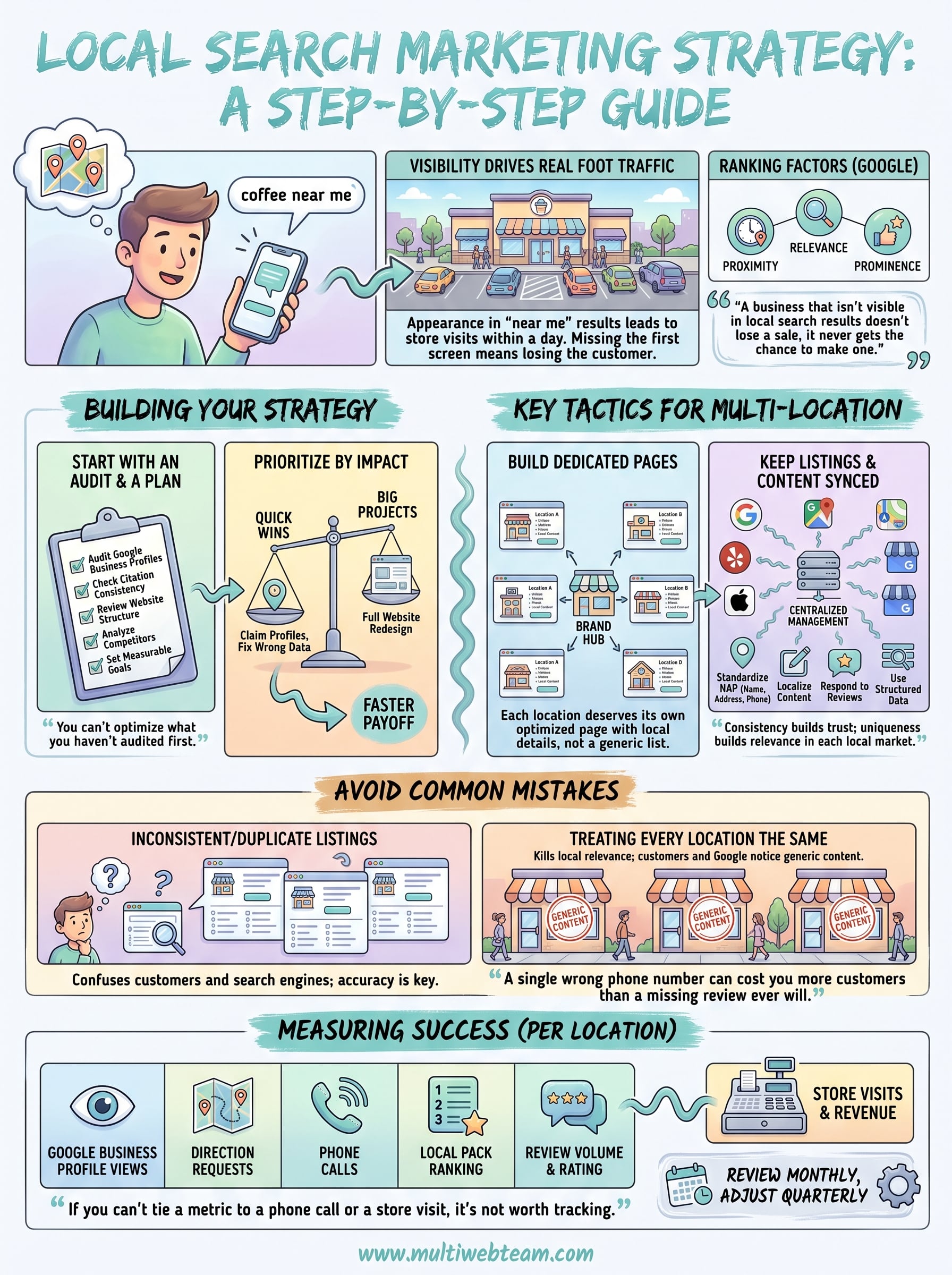
Most buying decisions start with a search, and Google's own research shows that a huge share of "near me" searches lead to a store visit within a day. If your business doesn't appear in that first screen of results, you don't get a second chance. The customer just calls the next name on the list. That's the core reason a local search marketing strategy isn't optional anymore, it's the difference between a full parking lot and an empty one.

Visibility drives real foot traffic

Search results near a customer's location determine who gets the call, the click, or the visit, not who has the nicest logo. Google's local search ranking factors weigh proximity, relevance, and prominence, and each of those depends on how well you've optimized your presence for that specific location.

A business that isn't visible in local search results doesn't lose a sale, it never gets the chance to make one.

The stakes multiply with every location

Running ten locations means running ten separate local search battles at the same time. Each one has its own competitors, its own review profile, and its own Google Business listing that needs consistent attention. Skip one, and that location quietly falls behind while the others grow.

  • Franchise owners compete against both national chains and local independents in every market.
  • Growing multi-location brands need every new location to rank fast, not months after opening.
  • Businesses without an internal team risk inconsistent listings that confuse customers and search engines alike.

Quietly losing visibility at even one location adds up fast across a growing footprint, which is exactly why a coordinated strategy beats a location-by-location scramble.

How to build your local search marketing strategy

Building a local search marketing strategy starts with a clear map of where you stand today, not a list of tactics you saw someone else use. You need a foundation before you add tools on top, or you'll waste months fixing avoidable mistakes.

You can't optimize what you haven't audited first.

Start with an audit and a plan

Before touching a single listing, pull up every location's current search presence and write down what's broken. This step alone saves you from duplicating work later.

  1. Audit every Google Business Profile for accuracy, completeness, and duplicate listings.
  2. Check citation consistency across directories like Yelp, Apple Maps, and industry-specific sites.
  3. Review your website structure to confirm each location has its own optimized page.
  4. Analyze competitors ranking in each local market you serve.
  5. Set measurable goals , like calls, direction requests, or booked appointments per location.

Prioritize by impact

Once you know what's missing, rank fixes by what moves the needle fastest. Claiming an unverified profile or fixing a wrong phone number usually beats a full website redesign in terms of speed and payoff, so tackle those quick wins before bigger projects.

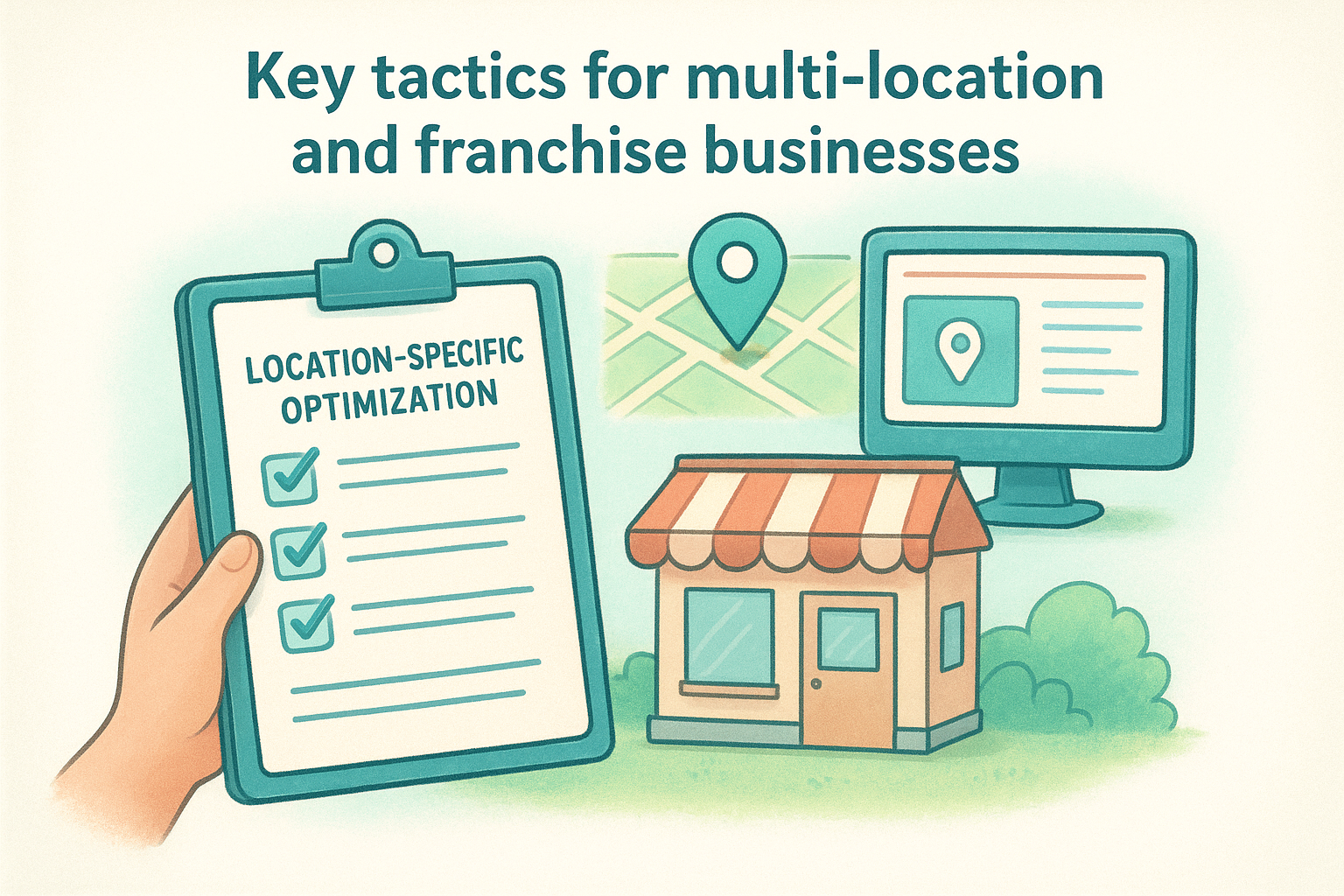
Key tactics for multi-location and franchise businesses

Franchises face a problem single-location businesses never deal with: every store needs to rank in its own zip code while still looking like part of one brand. That balance requires location-specific optimization built on a consistent framework, not ten different websites doing ten different things.

Consistency builds trust with search engines, uniqueness builds relevance in each local market.

Build dedicated pages, not one generic location list

Each location deserves its own page with a unique address, phone number, hours, and local content, not a shared paragraph buried on a "locations" page. Search engines reward pages that clearly match a local search intent , and customers trust a page that actually mentions their neighborhood.

Keep listings and content synced across every location

Managing dozens of Google Business Profiles by hand invites errors, so centralize updates through one system that pushes changes everywhere at once.

  • Standardize NAP data (name, address, phone) across every directory and profile.
  • Localize content , mentioning nearby landmarks, service areas, or region-specific promotions.
  • Respond to reviews at every location, not just the busiest ones.
  • Use structured data so search engines understand which content belongs to which location.

This is where a subscription-based management approach, rather than a one-off build, pays off long term.

Common mistakes that hurt local visibility

Even businesses with a decent budget sabotage their own rankings with small, repeated errors. Most of these mistakes don't look dangerous on their own, but multiplied across ten or twenty locations, they quietly tank your local search marketing strategy and hand visibility to competitors.

A single wrong phone number can cost you more customers than a missing review ever will.

Inconsistent or duplicate listings

Duplicate Google Business Profiles, mismatched addresses, or outdated hours confuse both customers and search engines. Google's guidelines on business information make clear that accuracy directly affects whether you show up at all.

  • Duplicate profiles splitting reviews and confusing rankings
  • Mismatched NAP data across directories and your own website
  • Ignored reviews , especially negative ones left unanswered for months
  • Thin location pages that copy the same paragraph across every city
  • No local content , missing neighborhood names, landmarks, or service areas

Treating every location the same

Copying one page across every location might save time upfront, but it kills relevance in each local market. Customers notice generic content instantly, and so does Google. Fixing these issues isn't glamorous work, but it's usually the fastest way to reclaim lost visibility.

How to measure local search marketing success

Numbers tell you whether your local search marketing strategy is actually working, not just whether you feel busy updating listings. Track the metrics that connect directly to revenue, not vanity stats that look nice on a dashboard but don't predict foot traffic.

If you can't tie a metric to a phone call or a store visit, it's not worth tracking.

Track the metrics that matter per location

Each location needs its own scorecard, since a strong metro-area store can hide a struggling suburban one if you only look at company-wide averages.

Metric What it tells you
Google Business Profile views How often each listing appears in search and Maps
Direction requests Interest that's converting into a planned visit
Phone calls from listings Direct leads from local search
Local pack ranking Visibility against nearby competitors
Review volume and rating Trust signals influencing click-through

Review monthly, adjust quarterly

Check these numbers monthly so you catch a dip before it becomes a pattern, and reassess your broader approach every quarter. A location losing direction requests for two straight months usually points to a listing issue, not a market downturn.

Putting your strategy into action

A strong local search marketing strategy isn't a one-time project. It's ongoing work across audits, listings, location pages, reviews, and monthly metrics, repeated for every location you run. Skip any piece and one store quietly falls behind while the rest of your brand grows.

Most multi-location owners don't fail because they lack ideas. They fail because they lack time to execute consistently across ten, twenty, or fifty locations at once. That's the real gap between a strategy on paper and one that actually fills parking lots.

If you'd rather hand this off than chase listings and reviews yourself, that's exactly what we do every day for franchises and multi-location brands. We build the pages, manage the profiles, and keep every location optimized under one subscription, no per-change fees, no internal team required. See how Multi Web Team handles it for you and get your locations showing up where it counts.

By cinchweb July 22, 2026
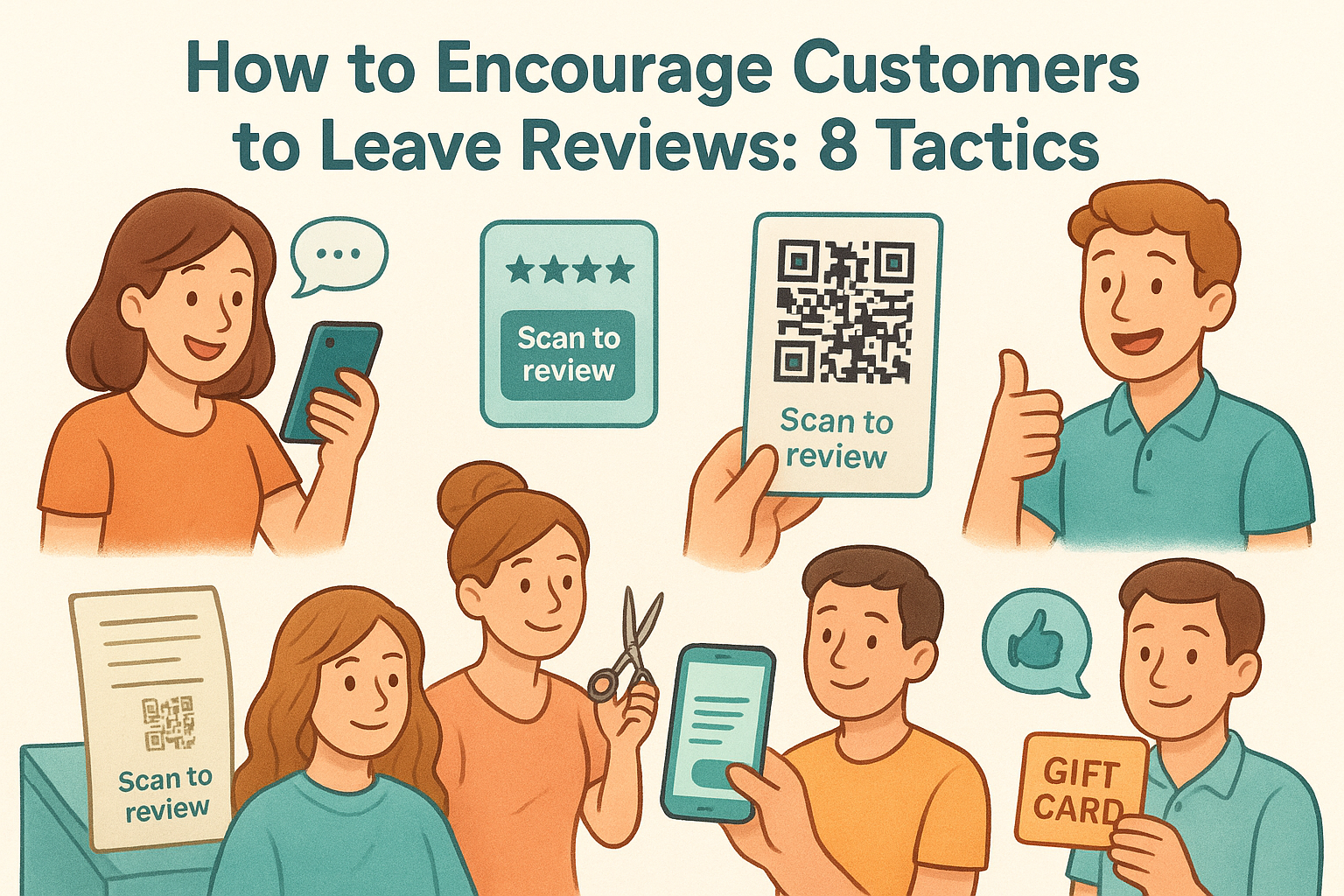
Learn how to encourage customers to leave reviews with 8 proven tactics—QR codes, timing, personalization, and incentives that tripled results for real businesses.
By cinchweb July 22, 2026
Learn how to get on Google Maps first page with proven ranking factors, profile setup tips, and multi-location strategies from Multi Web Team.
By cinchweb July 20, 2026
Learn on page vs off page seo differences and how multi-location brands audit both to boost rankings across every location page.
By cinchweb July 18, 2026
See what website management for small businesses costs, pricing tiers, DIY vs. outsourcing, and how to pick the right provider.

By cinchweb July 18, 2026
Learn local SEO for auto repair shops: optimize Google Business Profile, build location pages, earn reviews, and outrank nearby competitors.
By cinchweb July 17, 2026
Explore 10 examples of the best website design for lawyers, from niche branding to video testimonials, and see how multi-location firms scale smartly.
By cinchweb July 16, 2026
Discover 11 proven tactics to improve Google Maps ranking, from GBP optimization to citations, reviews, and multi-location SEO strategies.
By cinchweb July 14, 2026
Get a website redesign cost breakdown by page count and locations, spot hidden fees, and compare traditional quotes vs. subscription pricing.
By cinchweb July 13, 2026
Learn what is local search marketing and why multi-location brands lose customers without location-specific SEO, reviews, and citation management.
By cinchweb July 13, 2026
Compare 9 affordable law firm website design options, from DIY templates to full-service agencies, and find the best fit for your budget and locations.
SHOW MORE