Local SEO Services Pricing: Costs, Models & Inclusions (2026)
If you run a multi-location business or franchise, you already know that each location needs to show up in its own local search results. That means local SEO services pricing isn't just a line item, it's a recurring operational decision that directly affects how many customers walk through each door. But figuring out what you should actually pay? That's where things get murky. Rates vary wildly, pricing models differ from agency to agency , and it's not always obvious what you're getting for your money.
At Multi Web Team, we handle local SEO management for multi-location businesses as part of our subscription-based web design and management service. We work with franchise owners and growing brands every day, so we see firsthand how confusing and inconsistent SEO pricing can be, especially when you're scaling across multiple locations . That hands-on experience is exactly why we put this guide together: to give you a clear, honest breakdown of what local SEO services cost in 2026 and what should be included at each price point.
This article covers the most common pricing models (monthly retainers, project-based fees, and hourly rates), typical cost ranges based on business size and scope, and a detailed look at what's actually included in different service tiers. Whether you're evaluating your first SEO provider or comparing your current costs against market rates, you'll walk away with the numbers and context you need to make a confident decision.
Why local SEO pricing varies so much
Local SEO services pricing doesn't follow a single standard, and that's not because agencies are being random. The price you see reflects a combination of real factors: how competitive your market is , how many services you actually need, and what type of provider is doing the work. Before you can evaluate whether a quote is fair or inflated, you need to understand what's actually driving that number.
The scope of work changes everything
Not every business needs the same level of SEO work. A single-location pizza shop trying to rank in a mid-sized city needs far less ongoing work than a 30-location fitness franchise trying to rank each location in dense metro areas. The scope of work includes things like the number of Google Business Profiles being managed, how many landing pages need to be created or optimized, and how much content needs to be produced each month to build authority. When agencies quote a price, they're (or should be) building that number around your specific scope, not a flat rate that ignores what you actually need.
The single biggest driver of price differences between SEO proposals is the volume and complexity of the deliverables, not the quality of the agency.
Even within a single-location business, scope varies. If your site is technically broken, you need technical fixes on top of ongoing optimization. If you're in a new market with no backlinks or citations, you need foundational work before any optimization takes effect. Ongoing maintenance and new campaign work cost differently, and most providers bundle them together without making that distinction clear.
Market competition and location
The city and industry you operate in directly affects how much work is required to rank, which affects price. Competing for "plumber in Chicago" is fundamentally harder than competing for "plumber in rural Iowa." More competition means more content, more link building, and more optimization cycles to move the needle. Agencies that understand local SEO know this, and their pricing reflects the effort your specific market requires .
Your industry plays into this too. Some industries like legal services, home improvement, and healthcare have extremely competitive local search environments. Others are less saturated. If an agency quotes you the same rate regardless of your market or industry, that's a sign they're applying a template rather than evaluating your actual situation.
The type of provider doing the work
Who you hire matters as much as what they do. A solo freelancer, a boutique local SEO agency, a large digital marketing firm, and a platform offering automated SEO tools all charge differently, and they deliver different results. Freelancers typically charge less because they have lower overhead, but they may lack the bandwidth or tooling to manage complex multi-location campaigns. Large agencies charge a premium partly for their brand and infrastructure, not always for better output.
Boutique agencies that specialize in specific industries or business types often hit the right balance of expertise and cost efficiency . They've built systems around a particular type of work, which keeps overhead lower while maintaining quality. When you compare provider quotes, you're not always comparing identical services, which is why price alone is a poor filter.
How results are tracked and reported
One factor that rarely gets discussed is how much of the pricing includes reporting and strategy . Some providers charge a lower base rate but deliver minimal insight into what's working. Others build structured monthly reporting, keyword tracking, and strategic reviews into their pricing. That added layer of accountability and analysis takes real time to produce, and it shows up in the cost .
You should also factor in the technology stack a provider uses. Legitimate local SEO work requires tools for rank tracking, citation management, and competitor analysis. Some agencies pass those tool costs into your monthly fee, others absorb them. Knowing whether those costs are included helps you compare quotes more accurately and avoid being surprised by add-ons later.
Local SEO pricing models explained
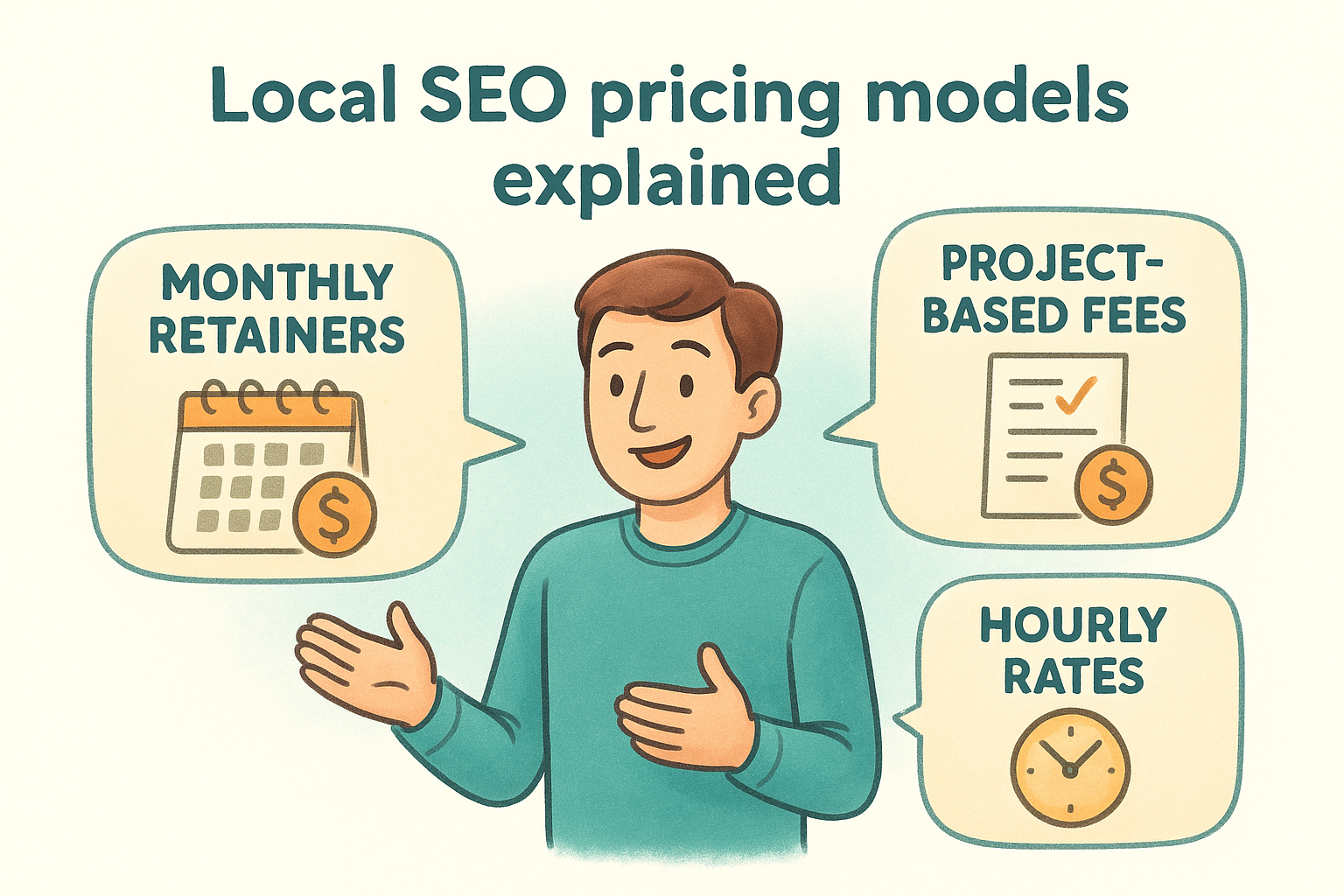
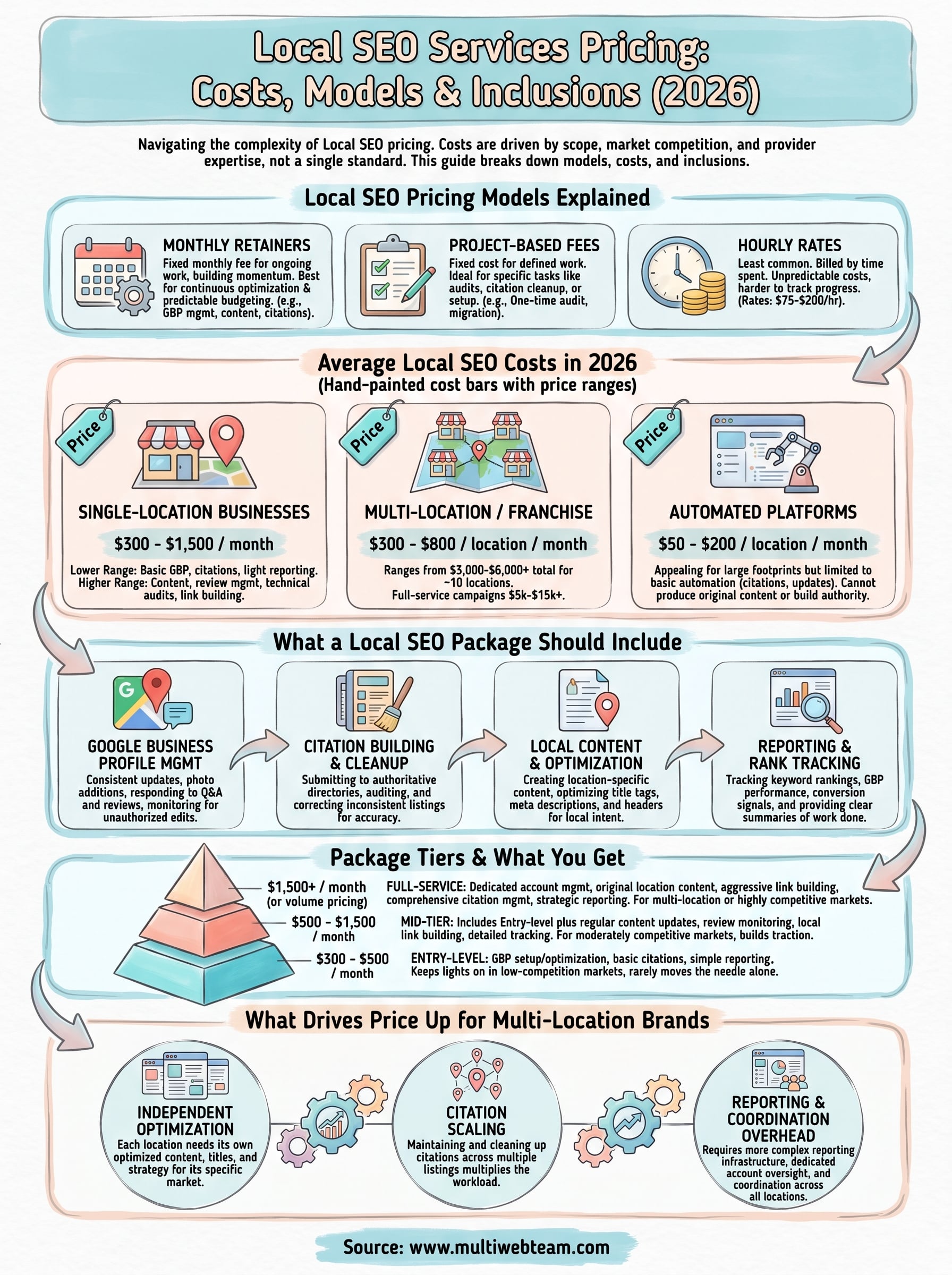
Before you can evaluate any specific quote, you need to understand how agencies structure their pricing . Local SEO services pricing generally falls into three main models: monthly retainers, project-based fees, and hourly rates. Each model fits a different type of business need, and choosing the wrong one can leave you overpaying for work you don't need or underpaying for work that never gets finished.
Monthly retainers
A monthly retainer is the most common model for ongoing local SEO work, and for most businesses it's the right fit. You pay a fixed monthly fee in exchange for a set scope of deliverables, which typically includes Google Business Profile management, content updates, citation maintenance, and rank tracking. Because local SEO is not a one-time fix but a continuous process, a retainer gives the agency enough runway to build momentum and adjust strategy based on what the data shows month over month.
Retainers work best when the scope of work is clearly defined upfront, so you know exactly what's included and what triggers an extra charge.
The predictability of a retainer also makes budgeting straightforward. You know your cost going in, and a good agency will report back each month on what was done and what moved as a result. Watch out for retainer agreements that lock you into long contracts without clear deliverables, because a retainer without accountability is just a recurring expense with no measurable output.
Project-based fees
Project-based pricing covers a defined body of work with a fixed cost . This model fits situations where you have a specific, bounded task: a full local SEO audit, a citation cleanup campaign, or a set of location-specific landing pages built from scratch. Once the project is complete, the engagement ends unless you contract for something new.
For multi-location businesses, project fees often come into play during a setup or migration phase , such as when you're launching a new location and need foundational SEO work done before ongoing management begins. Project pricing is less suited for the continuous optimization work that drives long-term ranking improvements, which is why most businesses pair an initial project with a retainer once the groundwork is laid.
Hourly rates
Hourly billing is the least common model in local SEO, but some freelancers and consultants still use it. Rates typically range from $75 to $200 per hour depending on the provider's experience and location. The problem with hourly billing is that it creates unpredictable costs and gives you no guarantee that the hours logged are translating into meaningful progress . Unless you're hiring a consultant for a one-time strategy session or an audit review, hourly pricing is harder to manage and evaluate compared to a retainer or project fee.
Average local SEO costs in 2026
Understanding the ranges behind local SEO services pricing gives you a realistic baseline before you contact a single agency. Prices have shifted upward slightly from previous years as the work has grown more complex, especially with Google's continued changes to Business Profile features and local pack ranking factors. What you'll find below reflects current market rates across different business types and service scopes.
What single-location businesses typically pay
For a single-location business, monthly retainers generally fall between $300 and $1,500 per month . The lower end of that range covers basic work: Google Business Profile management, a handful of citation submissions, and light monthly reporting. At $800 to $1,500 per month, you're getting more comprehensive service including regular content creation, review management, technical audits, and link building .
Most single-location businesses that see consistent ranking improvements are spending at least $500 per month, not because cheaper options don't exist, but because meaningful work takes time and the lower tiers rarely include enough of it.
Project-based work for a single location, such as a full local SEO audit or citation cleanup, typically runs $500 to $2,500 as a one-time fee depending on how much foundational work needs to be done.
What multi-location and franchise brands typically pay
When you're managing SEO across multiple locations, the math changes quickly. Agencies typically charge $300 to $800 per location per month at the multi-location level, though many providers offer volume discounts when the location count goes above 10 or 20. A 10-location brand running a mid-tier program could reasonably expect to pay $3,000 to $6,000 per month in total.
Larger franchise systems working with full-service agencies often land in the $5,000 to $15,000 per month range for campaigns that include dedicated content production, aggressive link building, full citation management, and structured reporting across all locations. These engagements are built around measurable output, not just time spent.
How platform-based and automated options compare
Automated SEO platforms typically charge $50 to $200 per location per month , which sounds appealing when you're looking at a large footprint. The tradeoff is that automation handles basic citation syndication and profile updates but cannot produce original content, build genuine backlinks, or respond to the nuanced ranking signals that actually separate top-ranked listings from the rest. These tools work well as a supplement to managed services but rarely as a replacement.
If you're comparing a low-cost automated tool against a managed service, make sure you're comparing actual deliverables, not just price points . A $99/month platform that maintains your citations is not doing the same job as a $600/month agency managing your entire local presence.
What a local SEO package should include
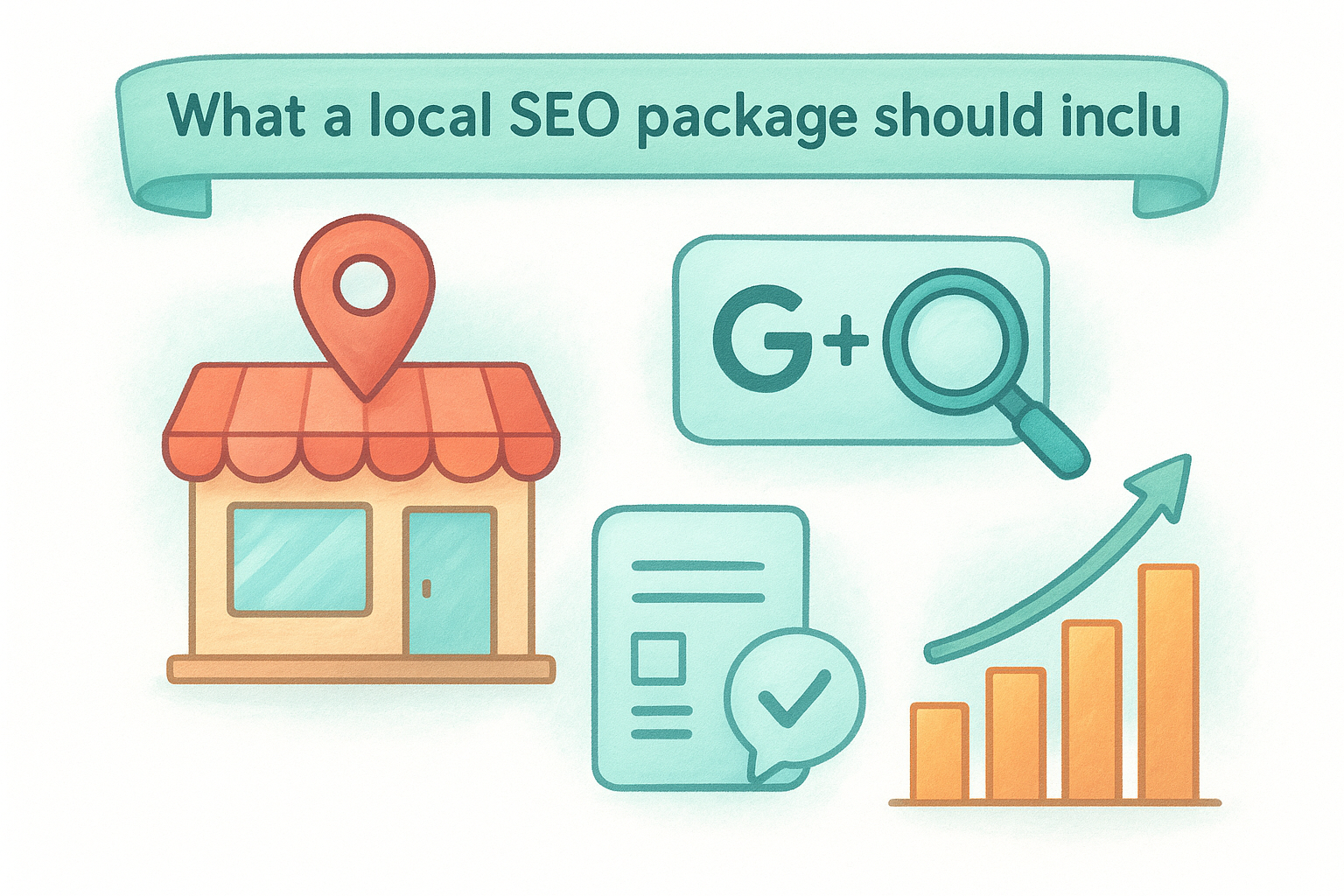
When you're evaluating local SEO services pricing , the number on the invoice only tells half the story. What you need to know is what work is actually happening behind it. A legitimate local SEO package isn't a vague promise of "better rankings." It's a defined set of recurring deliverables that each contribute to how your business appears in local search results. If a provider can't clearly explain what they do every month for your money, that's a problem.
Google Business Profile management
Your Google Business Profile is the most direct driver of local search visibility, and it needs consistent, active management to perform well. A solid package includes regular updates to your profile: posting updates, adding photos, maintaining accurate business hours, selecting and reviewing categories, and responding to the Q&A section. Providers should also monitor and flag any unauthorized edits , which happen more often than most business owners realize.
Ignoring your Google Business Profile after the initial setup is one of the fastest ways to lose local ranking ground to competitors who stay active.
Citation building and cleanup
Citations are online mentions of your business name, address, and phone number across directories, data aggregators, and local listing sites. A good package includes submitting your business to the most authoritative directories and, more importantly, auditing and correcting any inconsistent or duplicate listings that already exist. Inconsistent citations confuse search engines and reduce trust signals, so cleanup work is often just as valuable as building new listings.
Local content and on-page optimization
Content drives authority, and location-specific pages need ongoing attention to rank for the searches that matter most to each location. Your package should include regular content updates or creation tied to your actual service areas, not generic blog posts written with no geographic relevance. On-page optimization means your title tags, meta descriptions, header structure, and internal linking are all aligned with the local keywords your customers actually use.
Reporting and rank tracking
You should know exactly how your rankings are moving and what work was completed each month. A well-structured package includes keyword rank tracking for your target terms and locations, Google Business Profile performance data such as views, calls, and direction requests, and a clear written summary of what was done and what changed . Without this layer of accountability, you're paying for activity, not results. Rank tracking also tells your provider when to adjust strategy before a small dip turns into a significant drop.
Every item on this list requires regular, skilled labor. When a package is missing one of these components, it's usually reflected in the results, not just the price.
Package tiers and what you get at each level
Most agencies structure local SEO services pricing into tiers, and understanding what each tier actually delivers helps you avoid paying for work you don't need or settling for a package that leaves critical gaps. The tier you need depends on your competitive environment, location count, and how much ground you need to cover before your rankings start to move. Here's a breakdown of what each level typically includes and who it fits best.
Entry-level packages ($300 to $500 per month)
Entry-level packages cover the basics: Google Business Profile setup or optimization, basic citation submissions, and simple monthly reporting . These packages work for businesses in low-competition markets that already have a clean technical foundation and just need ongoing maintenance to stay visible. What you won't get at this price is content creation, link building, or any real strategic oversight.
Entry-level packages keep the lights on, but they rarely move the needle if your competitors are investing more heavily in content and authority building.
If your market is competitive or your profile has existing issues like duplicate listings or inconsistent citations, this tier likely won't generate meaningful results on its own.
Mid-tier packages ($500 to $1,500 per month)
This range is where most single-location and small multi-location businesses get real traction . A mid-tier package typically includes everything in the entry level plus regular content updates, review monitoring and response support, local link building, and more detailed rank tracking. The reporting at this tier becomes genuinely useful because your provider is tracking keyword movement across your target service areas and adjusting the work accordingly.
For businesses in moderately competitive markets, this tier is usually the right starting point. You're getting enough recurring deliverables to build authority over time without paying for the full scope of a large franchise campaign.
Full-service packages ($1,500 and above per month)
Full-service packages are built for businesses that need consistent output across multiple locations or highly competitive markets . At this level, your provider is producing original location-specific content each month, running active link building campaigns, managing your entire citation footprint, and delivering structured strategic reporting. Many full-service packages also include dedicated account management , meaning someone who knows your business is reviewing performance and making recommendations proactively rather than waiting for you to ask.
For multi-location brands, the per-location rate at this tier often comes down with volume. A brand managing 15 locations under one full-service agreement typically pays less per location than a brand managing three , because the agency can build shared infrastructure across the campaign. Make sure any full-service agreement you sign clearly defines deliverables per location, not just total campaign deliverables, so you know exactly what each site is receiving each month.
What drives price up for multi-location brands
If you're running multiple locations, local SEO services pricing doesn't scale at the same flat rate you'd pay for a single storefront. The work genuinely multiplies. Each location has its own Google Business Profile, its own target keywords, its own citation footprint, and its own competitive landscape to contend with. Understanding what pushes the total cost higher helps you budget accurately and push back when a proposal doesn't justify its price.
Each location needs independent optimization
You can't apply one SEO strategy across all locations and expect each one to rank well. Every location page on your website needs its own optimized content , unique title tags, and locally relevant signals that tie it to a specific service area. If your 12 locations are spread across different cities or even different states, you're dealing with 12 separate competitive markets , each requiring its own research, content, and performance tracking.
The most common mistake multi-location brands make is treating their SEO campaign as a single effort rather than a coordinated set of location-specific campaigns running in parallel.
This means content production costs multiply with your location count. An agency managing your campaign needs to produce and update material for each location consistently, not just duplicate one page with a city name swapped in. Search engines penalize thin, templated content, so the work has to be genuinely location-specific to move rankings.
Citation management scales across every listing
Each location carries its own name, address, and phone number that needs to appear consistently across dozens of directories and data aggregators. When you have 20 locations, that's 20 separate citation profiles to build, monitor, and correct when errors appear. Inconsistent or outdated listings across even a handful of directories can suppress rankings for specific locations, so ongoing citation maintenance is not optional.
Mergers, rebrands, address changes, and phone number updates all trigger citation cleanup work across every location simultaneously. Agencies factor this ongoing maintenance into their per-location pricing, which is why multi-location campaigns cost more in aggregate than a comparable number of independent single-location engagements.
Reporting and coordination add overhead
Structured reporting for a multi-location campaign takes significantly more time to produce than a single-location summary. Your provider needs to track rankings, Google Business Profile performance, and conversion signals across every location, then surface the insights that actually help you make decisions. That means custom reporting infrastructure, dedicated account oversight , and regular strategy reviews to catch underperforming locations before small issues compound.
Coordination overhead is real. Keeping 15 or 20 location profiles aligned, updated, and optimized requires systems that a single-location campaign simply doesn't need. When you see higher per-location pricing for a multi-location package, this operational complexity is a large part of what you're paying for.
How to compare providers and avoid bad SEO
When you're evaluating local SEO services pricing , the hardest part isn't finding providers, it's figuring out which ones actually deliver results and which ones are selling you a story. The SEO industry has a long history of vague promises and poor accountability, so knowing how to compare proposals critically protects both your budget and your rankings.
Ask for deliverables, not guarantees
No legitimate SEO provider can guarantee a specific ranking position. Search engines control rankings, not agencies. What a good provider can guarantee is a defined set of monthly deliverables : how many citations they'll manage, what content they'll produce, how often they'll update your Google Business Profile, and what reporting you'll receive. When you ask a provider to list their monthly deliverables for your specific business and they give you vague answers like "improving your online presence," that's a sign their process isn't well-defined.
Ask every provider to give you a written scope of work before you sign anything, and compare those scopes line by line rather than comparing prices alone.
Request examples of reporting formats they send to current clients . A provider confident in their process will show you what accountability looks like. One that deflects or talks only about results without explaining the work should raise immediate concern.
Spot the red flags early
Certain patterns show up consistently with low-quality SEO providers, and catching them early saves you time and money. Guaranteed first-page rankings, unusually low flat rates for large location counts, and pressure to sign long contracts immediately are all warning signs. So is a provider that promises results in 30 days. Legitimate local SEO takes three to six months to show meaningful movement, and any provider who tells you otherwise is misrepresenting how search engines work.
Watch for providers who build backlinks from unrelated, low-authority sites or who generate content by spinning existing articles rather than writing original location-specific material. Both tactics can trigger Google's spam policies and actively damage your rankings rather than improve them.
Check references and verify track record
Before you commit to any provider, ask for two or three references from current or recent clients in similar industries . A reputable agency will provide them without hesitation. When you speak with those references, ask specifically about communication quality, whether deliverables were consistently met, and how rankings moved after the first six months.
You should also check whether the provider's own website ranks well in local search for their own service terms. An agency that can't demonstrate local SEO competence for their own business is a poor choice for managing yours. It's a simple check that filters out a significant portion of low-quality vendors before a single conversation takes place.
How to set a realistic local SEO budget
Start by matching your budget to your actual competitive environment, not to the lowest quote you can find. Single-location businesses in moderate markets can make real progress in the $500 to $1,000 per month range. Multi-location brands need to plan for $300 to $800 per location per month , with the understanding that volume agreements often bring that per-location cost down. Build your budget around a defined scope of deliverables, review that scope quarterly, and adjust as your location count or market conditions change.
Treat local SEO services pricing as an investment tied to customer acquisition, not a fixed overhead expense. When you track how many calls, direction requests, and form submissions each location generates from organic search, the return becomes measurable and the budget decision becomes easier to justify. If you want a web management partner that handles local SEO across all your locations without the guesswork, see how Multi Web Team works.