What Is a Business Landing Page? Purpose, Examples, & Tips
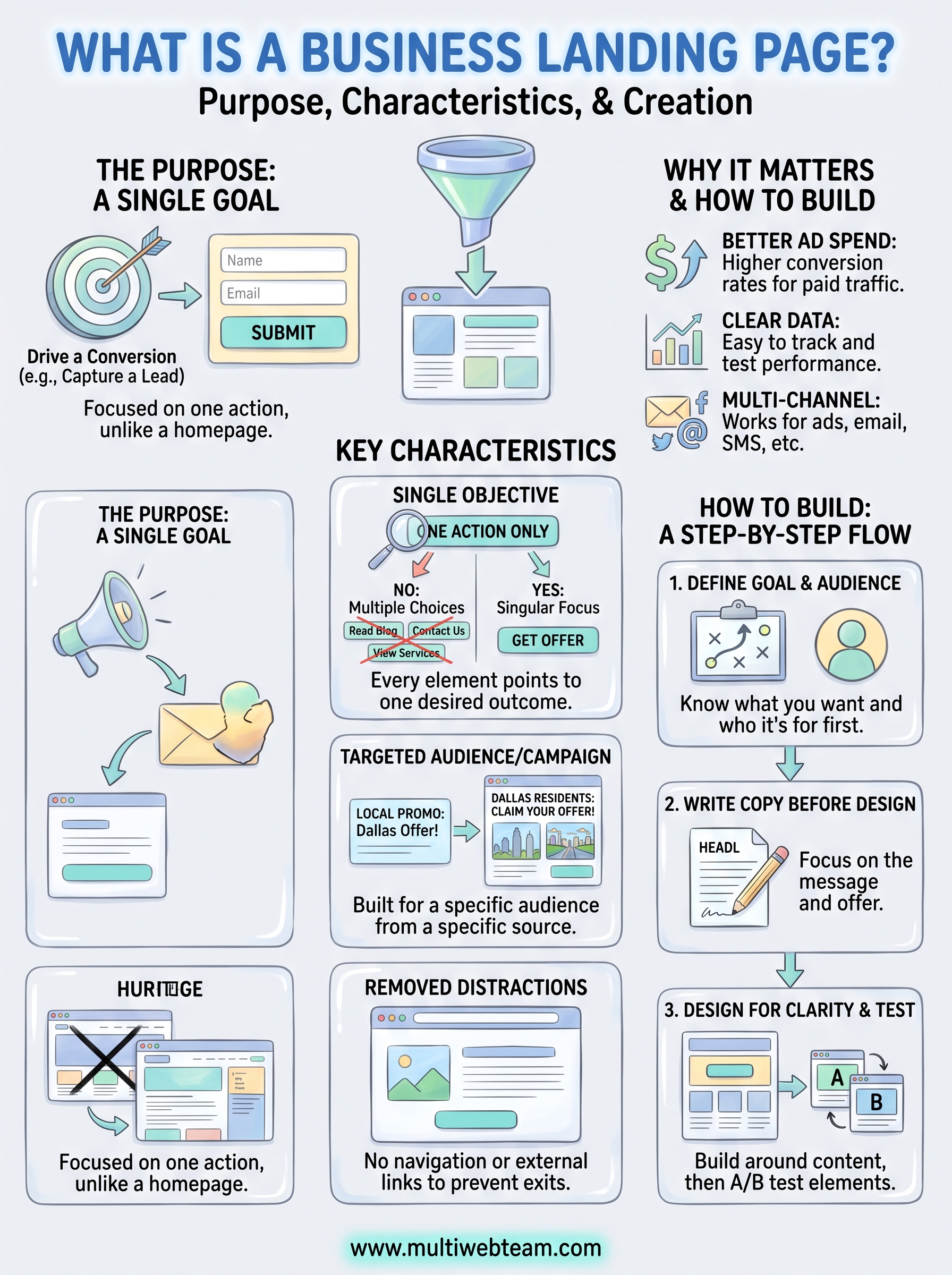
If you've ever wondered what is a business landing page , the short answer is this: it's a standalone web page built for one specific goal, usually to capture a lead or drive a conversion . Unlike your homepage, which serves as a general hub, a landing page strips away distractions and focuses a visitor's attention on a single action, like filling out a form, booking an appointment, or claiming an offer.
For multi-location businesses and franchises, landing pages are especially powerful. A franchise running a promotion at 15 locations can create location-specific landing pages that speak directly to each local audience, rather than dumping everyone onto a generic page and hoping for the best. That's the kind of precision that turns ad spend into actual customers .
At Multi Web Team, we build and manage custom websites for multi-location businesses, and landing pages are a core part of that work. We've seen firsthand how a well-built landing page outperforms a cluttered homepage when there's a clear objective on the line. So we put this guide together to break down exactly what business landing pages are, how they differ from other pages on your site, what makes them effective , and how to create ones that actually convert. Whether you're launching your first landing page or rethinking your current approach, this article covers the fundamentals you need to get it right.
What makes a landing page a business landing page
A general web page tries to serve many purposes at once. A business landing page does the opposite - it exists for one reason, pointed at one audience, with one desired outcome. That focused structure is what separates it from every other page on your website. When someone asks what is a business landing page , the defining characteristic isn't the design or the copy - it's the deliberate removal of everything that doesn't support a single goal.
It has a single, focused objective
Every element on a business landing page points toward one action. The headline, the images, the copy, and the call-to-action button all work together to move a visitor toward that outcome, whether that's submitting a contact form, calling a location, or redeeming an offer. Nothing on the page sends the visitor somewhere else or asks them to make a different decision.
A landing page with two competing calls-to-action typically converts worse than one with a single, clear next step because you force the visitor to decide which path to take before they've committed to anything.
This single-objective structure is also what makes landing pages measurable. Because only one action matters , you can track conversion rates with precision and know exactly whether the page is working. If you have five goals spread across one page , you can't tell which one is pulling weight and which one is dragging performance down.
It's built around a specific audience or campaign
A business landing page isn't built for everyone who visits your website. It's built for a specific segment of people arriving from a specific source , whether that's a paid ad, an email campaign, or a social post. The page is written to match the expectations of that audience, using the same language and offer they saw before they clicked.
For multi-location businesses, this specificity gets even more targeted. A franchise with locations in Dallas and Denver can build separate landing pages for each city, each one speaking to the local audience with local details like addresses, phone numbers, and region-specific promotions. That alignment between what someone expects and what they find when they land is what drives conversions, and it's nearly impossible to achieve with a single generic page serving every location at once.
It removes distractions on purpose
Most business websites include navigation menus, sidebars, footers with links, and a range of content competing for a visitor's attention. A well-built landing page strips most of that away . You'll typically see no main navigation, a minimal footer, and no internal links pulling visitors off the page before they've taken the action you want them to take.
This isn't accidental. Every link you remove from a landing page is a potential exit you've closed . When a visitor has fewer places to go, they either complete the action you've designed the page around or they leave. That sounds blunt, but it's exactly the kind of clarity that produces a higher conversion rate compared to pages that give visitors 20 different options and no clear direction. For businesses running paid campaigns, removing those distractions is especially important because every click that bounces without converting costs real money, and a cluttered page is one of the fastest ways to burn through ad budget without results.
Why business landing pages matter in marketing
Understanding what is a business landing page is one thing - knowing why it matters to your marketing results is another. Landing pages give you a controlled environment where you decide exactly what a visitor sees, reads, and does next. That level of control is something your homepage or blog posts can't replicate because those pages serve too many purposes at once.
When you send paid traffic to a landing page instead of your homepage, you can expect significantly higher conversion rates because the page matches what the visitor came to do.
They make your ad spend work harder
When you run a Google Ads or Meta campaign, the page you send traffic to has a direct impact on your cost per lead and return on ad spend . A landing page built to match your ad's message keeps visitors engaged and moving toward the conversion. Your homepage often introduces confusion because it covers your full business story rather than answering the one question the visitor had when they clicked your ad.
For multi-location businesses, this matters even more. Each location's campaign can point to a dedicated landing page that references the right city, the right offer, and the right contact details , so the visitor never has to wonder whether the page is relevant to them.
They give you data you can actually act on
Landing pages isolate a single conversion action , which makes testing and improvement straightforward. You can run an A/B test on your headline, change your call-to-action button copy, or swap out an image, and then measure the direct impact because the page has no other competing goals muddying your data.
Without that isolation, improving your marketing becomes guesswork. If your homepage converts at 1.5% and you change four things at once, you have no idea which change drove improvement. A dedicated landing page gives you a clean testing environment where your decisions are based on real, trackable evidence rather than assumptions.
They work across every channel
Your landing pages aren't limited to paid search. Email campaigns, social ads, and SMS promotions can all point to a page built specifically for that audience and message. That flexibility makes landing pages useful at every stage of your marketing , from early awareness campaigns down to bottom-of-funnel offers designed to close a sale or book an appointment.
Business landing page vs homepage vs service page
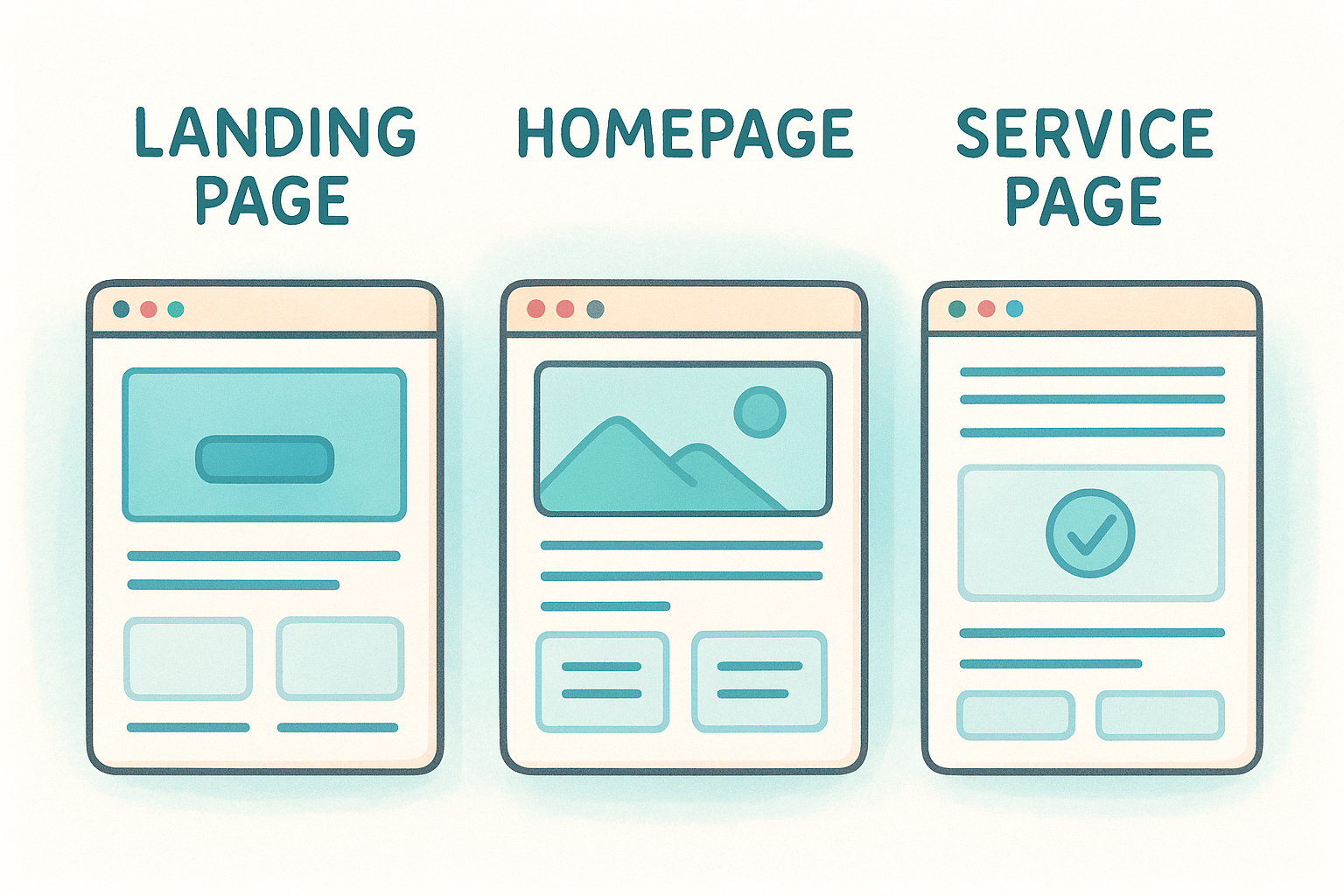
One of the most common points of confusion in web design is treating these three page types as interchangeable. They serve different purposes for different visitors at different stages of their journey, and mixing up their roles costs you conversions. Once you understand what is a business landing page and how it compares to the other two, you'll know exactly where each one belongs in your marketing setup.
Your homepage is a hub, not a conversion tool
Your homepage exists to introduce your brand and help visitors find where they need to go. It carries navigation menus, multiple service categories, and general trust signals because it serves the widest possible range of visitors at once. Someone who has never heard of your business lands there expecting an overview, not a specific offer.
That's why sending paid traffic to your homepage rarely works - the page isn't designed to complete one action, so visitors wander and leave without converting.
A landing page removes that open-ended exploration entirely. It assumes the visitor already knows why they clicked and gets straight to the point. For a multi-location business, that difference between a homepage visit and a landing page visit can mean the difference between a prospect who bounces and one who books an appointment or claims an offer .
Service pages explain; landing pages convert
Service pages sit somewhere between a homepage and a landing page. They describe what you offer in detail , cover pricing, answer common questions, and help visitors evaluate whether your business fits their needs. A service page for a fitness franchise might list class types, membership tiers, and location details across the whole site.
The key difference is intent. Service pages are built for research mode , when someone is still deciding. Landing pages are built for action mode , when someone is ready to take the next step and you want to make that step as frictionless as possible. A service page that tries to double as a landing page usually fails at both jobs because it splits its energy between informing and converting.
Here's a quick comparison of how the three page types differ:
| Page Type | Primary Purpose | Navigation | Best Used For |
|---|---|---|---|
| Homepage | Brand overview and wayfinding | Full navigation | Organic discovery and first impressions |
| Service page | Explain and build consideration | Full navigation | SEO and mid-funnel research |
| Landing page | Drive one specific action | Minimal or none | Paid campaigns and targeted offers |
Types of business landing pages and best uses
Not every business landing page is built the same way. Different goals call for different page structures , and choosing the right format before you start building saves you from creating a page that technically exists but doesn't perform. When people ask what is a business landing page, they often don't realize there are several distinct types, each designed to do a specific job at a specific point in the customer journey.
Lead generation landing pages
Lead generation pages are the most common type you'll encounter. Their entire purpose is to collect contact information , usually a name, email address, and phone number, in exchange for something of value like a free consultation, a quote, or a promotional offer. Service-based businesses and franchises use these heavily because the sale doesn't happen on the page itself - it happens later, after a follow-up.
A lead generation page lives or dies on the strength of its offer - if what you're exchanging for contact details isn't compelling, visitors won't hand over their information.
These pages work best for service businesses, franchises, and any company with a longer sales cycle where personal follow-up is part of the conversion process .
Click-through landing pages
Click-through pages take a different approach. Instead of asking for contact information upfront, they present an offer in enough detail to build confidence, then send the visitor to a checkout or booking page through a single button. The goal is to warm up the visitor before they commit, which reduces hesitation at the final step.
These pages are well-suited for e-commerce promotions, event registrations, and businesses with clearly defined service packages where the offer itself does most of the selling work.
Location-specific landing pages
For multi-location businesses, location-specific landing pages are some of the highest-value pages you can build. Each page targets a single geographic area, includes that location's contact details, hours, and offers, and speaks directly to a local audience rather than a general one. Sending a visitor in Austin to the same page as a visitor in Seattle is a missed opportunity because neither page feels relevant to where they actually are.
These pages also carry SEO value alongside their conversion function. Search engines can match page content to location-based queries , which means a well-built location page can pull in organic local traffic in addition to converting visitors from paid campaigns. That dual role makes them one of the most efficient page types for growing multi-location businesses.
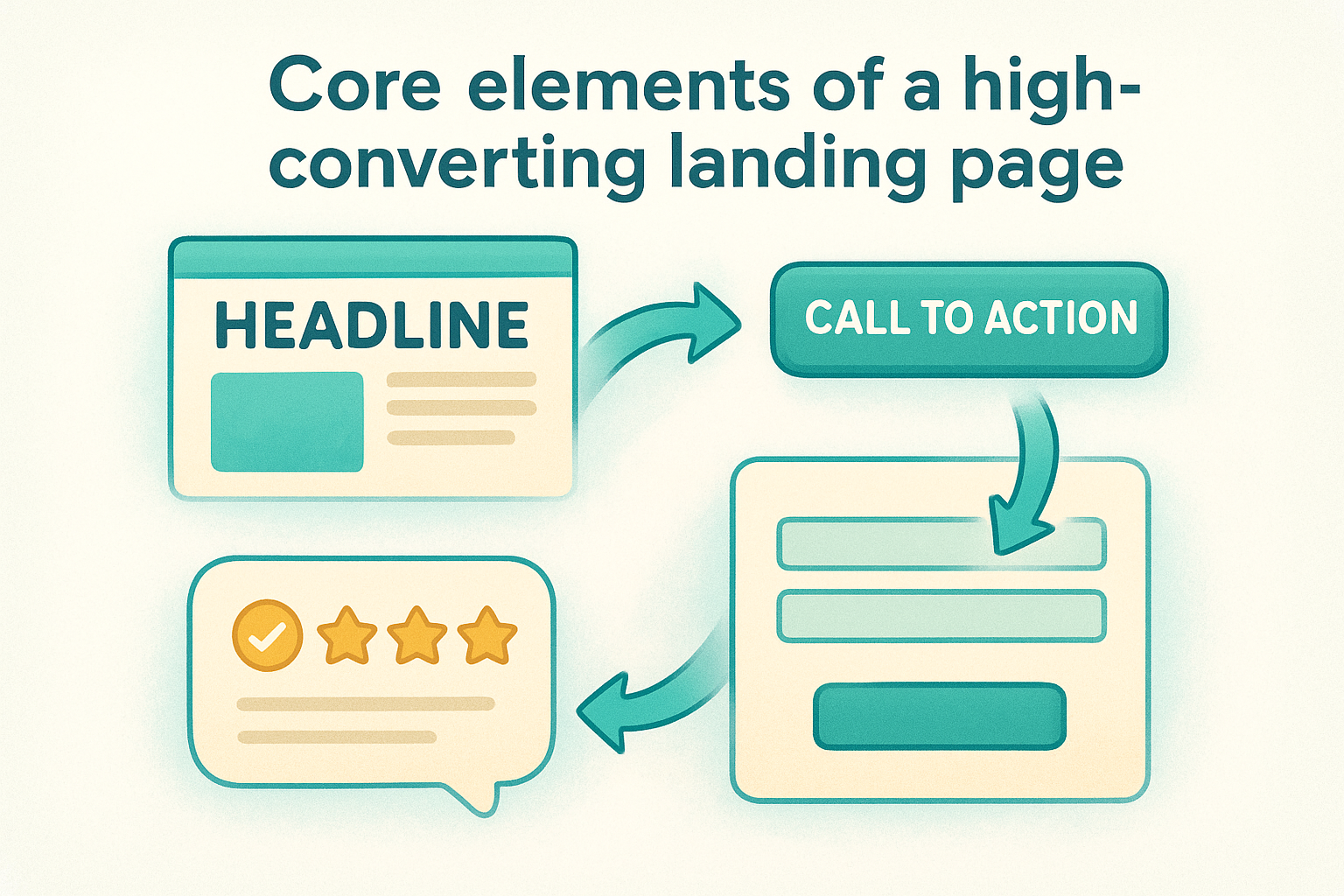
Core elements of a high-converting landing page
Understanding what is a business landing page is only useful if you can actually build one that works. A page can have the right goal and the right audience, but still fail to convert if the core components are missing or weak. Every high-performing landing page shares a set of elements that work together to move a visitor from interest to action without creating friction along the way.
A headline that matches the visitor's expectation
Your headline is the first thing a visitor reads, and it needs to confirm that they landed in the right place . If someone clicked a paid ad promising a free consultation for local businesses, your headline should reflect that exact offer. When your headline matches the message that brought someone to the page, you eliminate the moment of doubt that causes visitors to leave before reading anything else.
The stronger the connection between your ad or email copy and your headline, the lower your bounce rate will be, because visitors immediately feel they're in the right place.
A weak or generic headline forces visitors to work harder to understand whether the page is relevant to them, and most people won't bother doing that work.
A clear and singular call-to-action
Your call-to-action tells the visitor exactly what to do next. The button text, placement, and visual weight all contribute to whether a visitor follows through. Use specific language like "Book Your Free Consultation" or "Claim This Offer" rather than vague phrases like "Submit" or "Click Here." One call-to-action per page keeps the visitor's decision simple and removes the hesitation that comes from being asked to choose between multiple paths.
Social proof and trust signals
Visitors who arrive on a landing page often have no prior relationship with your business. Customer reviews, star ratings, and real testimonials give them a reason to trust what you're offering before they commit to handing over their contact information. For multi-location businesses, local reviews tied to specific locations carry extra weight because they feel relevant rather than generic.
A form or contact method that fits the goal
Your lead capture form should ask for only the information you need to follow up effectively. Longer forms reduce completion rates because they feel like a commitment before the visitor has received any value. Keep your form short, place it above the fold where possible , and match the fields to what the next step actually requires.
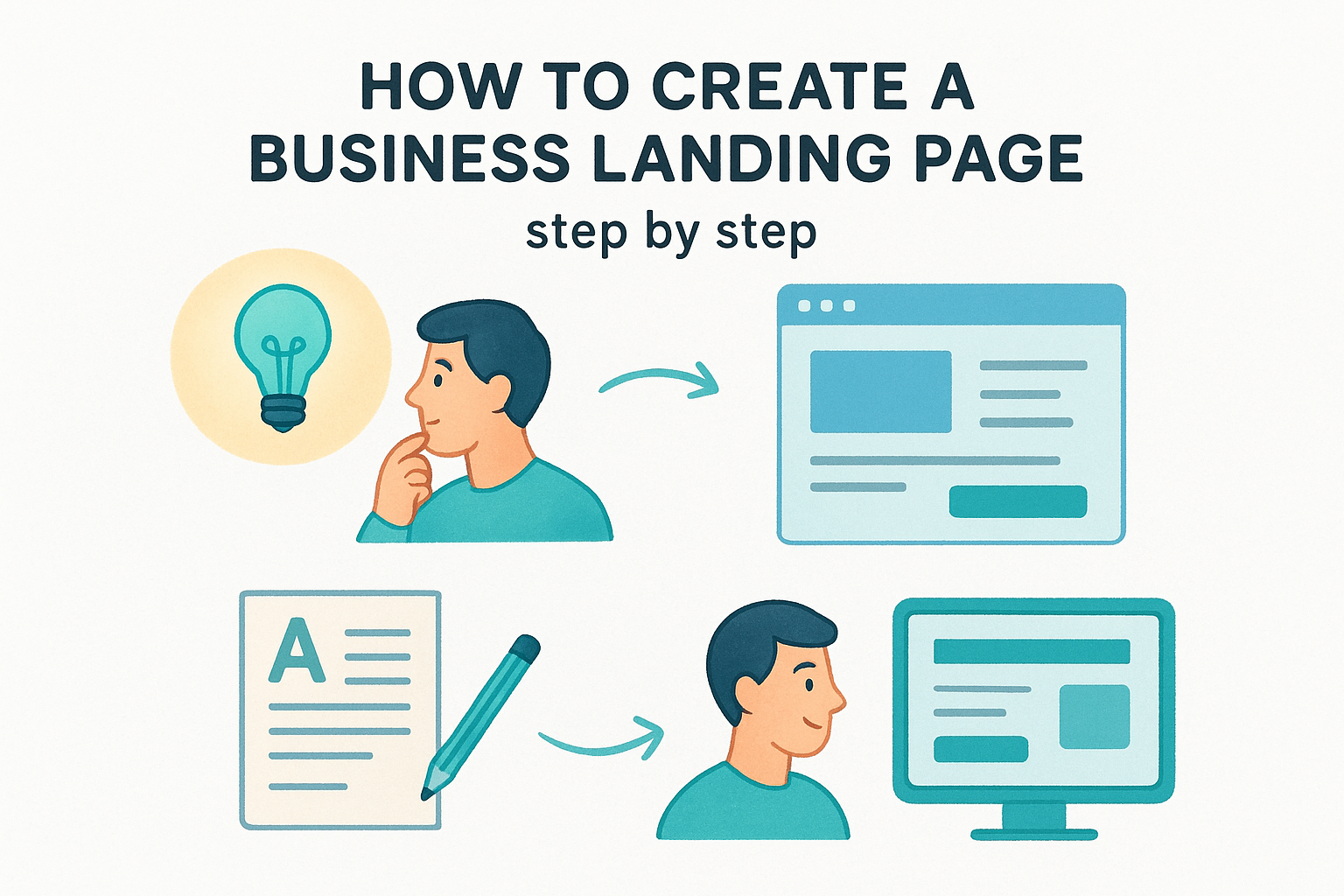
How to create a business landing page step by step
Knowing what is a business landing page is the starting point, but building one that converts requires a deliberate sequence of decisions. Most people start with design when they should start with strategy. Getting the order right means your page has a clear foundation before you place a single element on screen, and it prevents the common mistake of building something that looks polished but fails to move visitors toward action.
Define your goal and audience before anything else
Before you write a word or open a design tool, nail down exactly what you want the page to do and who it's for . Are you capturing leads for a specific location? Driving sign-ups for a limited promotion? Getting calls from a particular zip code? Your answers to those questions shape every decision that follows. A page built without a defined goal ends up trying to serve everyone and converting no one.
Once you have the goal locked in, define the specific audience arriving at this page. Think about where they're coming from, what they already know, and what problem they need solved right now.
Write your copy before you design
Your copy does the conversion work - your design just makes it easier to read.
Start with your headline , since it's the first test of whether your page holds a visitor's attention. Then write your subheadline, the body copy that supports your offer, and your call-to-action button text . Writing copy first forces you to clarify your offer and identify any gaps before you start arranging visual elements around incomplete messaging.
Keep sentences tight. Remove any line that doesn't directly support the single action you want the visitor to take.
Design for clarity, then build and test
With your copy done, design the page around the content rather than forcing copy to fit a layout. Use clear visual hierarchy so visitors read top to bottom without confusion. Place your call-to-action button above the fold where visitors see it immediately, and keep any form short enough to complete in under a minute.
Once the page is live, run a basic A/B test on your headline or button text before making larger changes. Start with the element that has the most impact on first impressions, measure conversion rates over a meaningful sample size, and change one element at a time so you know what's actually driving improvement.
Business landing page examples for common goals
Seeing concrete examples makes the definition click. Once you understand what is a business landing page in theory, it helps to look at how real goals translate into real page structures. The goal you're working toward shapes everything from your headline to your form length, so here are three common scenarios and what those pages actually look like in practice.
Free consultation or quote request
A free consultation landing page is one of the most common formats for service-based businesses. The page leads with a headline that names the specific service and the location, such as "Get a Free Website Audit for Your Dallas Franchise." Below that, a short bulleted list covers what the visitor gets from the consultation so they understand the value before they fill out the form. The form itself asks for a name, email address, phone number, and maybe one qualifying question like business type or number of locations. Nothing else lives on the page.
The offer on a consultation landing page has to be specific enough that the visitor knows exactly what they're signing up for, because vague offers generate vague leads.
Limited-time promotion or offer
Promotional landing pages create urgency around a specific offer with a defined end date. A fitness franchise running a "First Month Free" campaign builds a page around that single offer, with a bold headline, a short description of what's included, a few customer testimonials, and one button that takes the visitor to a checkout or booking screen . The promotion drives the entire page, which means the copy stays short and the visual design keeps the offer front and center. Removing the navigation means visitors either claim the deal or leave, which keeps conversion data clean and easy to interpret .
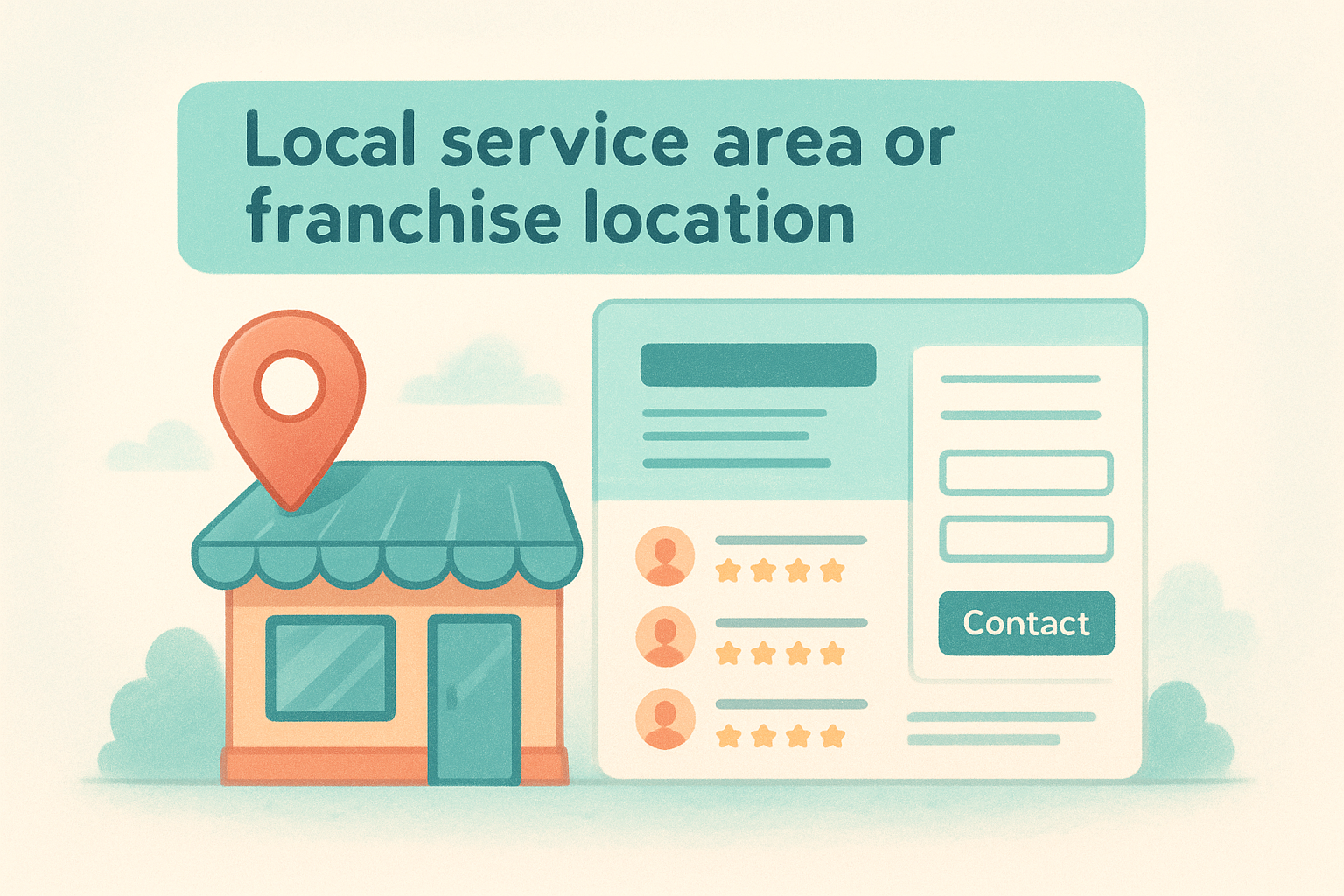
Local service area or franchise location
Location-specific landing pages work for multi-location businesses that want to convert visitors searching for services in a particular city or neighborhood. A home services franchise builds one of these pages for each market it operates in, including the local phone number, address, service area details, and reviews from customers in that city. The page answers the visitor's most immediate question, whether the business actually serves their area, before asking them to fill out a contact form . That relevance is what separates a page that converts from one that gets traffic and produces nothing.
How to drive traffic to a landing page and match intent
Building a strong landing page is only half the job. Once you understand what is a business landing page and get one live, you need to send the right people to it from the right sources. Traffic that doesn't match your page's offer and audience will bounce fast, which raises your cost per lead and distorts your conversion data. Every channel you use to drive traffic needs to align with the specific message and audience the page was built for.
Paid search and social ads
Paid search campaigns on platforms like Google Ads are one of the most reliable ways to put your landing page in front of people who are actively searching for what you offer . When your ad copy and your landing page headline carry the same message, visitors land with their expectations already met, and that alignment is what drives action. Your ad budget works harder when the page it points to is built specifically for that campaign rather than a general page on your site.
The tighter the match between your ad's promise and your landing page's headline, the lower your cost per conversion will be because fewer visitors leave before taking action.
Social ads on Meta and LinkedIn serve a different function. These visitors weren't searching for you, so your landing page needs to do more work upfront to establish context and build enough interest to justify the action you're asking for. Keep your offer clear and prominent above the fold, and make sure the visual style of your ad continues onto the landing page so visitors feel a consistent experience from click to conversion.
Organic search and local SEO
Location-specific landing pages can attract organic traffic from people searching for services in a particular city or neighborhood. When your page content includes location names, local service details, and naturally structured copy, search engines can match it to relevant local queries. For multi-location businesses, this means each location's landing page can pull in visitors who never saw a paid ad at all.
Email and SMS campaigns
Your existing contact list is one of the highest-intent traffic sources available to you because those people already opted in to hear from your business. When you send a campaign promoting a specific offer, link directly to a landing page built around that offer. Sending email subscribers to your homepage instead loses the momentum of a focused message and forces recipients to search for the offer themselves.
How to measure and improve landing page performance
Once you understand what is a business landing page and get one running, your job shifts to watching the numbers and making deliberate improvements. A landing page that isn't performing well won't fix itself, and the only way to know whether changes are actually helping is to track the right metrics from the start.
Track the metrics that reveal actual performance
Your conversion rate is the most important number on any landing page. It tells you what percentage of visitors complete the action you built the page around, whether that's submitting a form, calling a location, or claiming an offer. A low conversion rate is the signal that something on the page isn't connecting with your audience, and it points you toward where to focus your attention first.
Beyond conversion rate, pay attention to these core metrics:
- Bounce rate : The percentage of visitors who leave without taking any action. A high bounce rate often means your traffic source and page message aren't aligned.
- Time on page : How long visitors spend reading before they leave or convert. Very short time on page suggests your headline or offer isn't holding attention.
- Form completion rate : If your form gets more views than submissions, the form itself may be asking for too much or creating too much friction.
- Traffic source breakdown : Knowing whether your conversions come from paid ads, email, or organic search tells you which channels are worth investing more in.
Tracking conversion rate by traffic source, not just overall, shows you exactly which campaigns are delivering qualified visitors and which ones are wasting budget.
Use testing to make improvements systematically
A/B testing is how you turn data into better performance without guessing. Pick one element to test at a time, your headline, your call-to-action button text, or the length of your form, and run both versions simultaneously until you have enough data to draw a conclusion. Changing multiple elements at once makes it impossible to know which change actually moved the needle.
Start with the elements visitors see first , since your headline and primary call-to-action have the highest impact on whether someone stays or leaves. After you find a clear winner, move to the next element and repeat the process. Consistent, incremental testing compounds over time, and a page that converts at 4% instead of 2% effectively doubles the return on every dollar you spend sending traffic to it.
Next steps for your landing page
Now that you know what is a business landing page and how each piece works together, the next move is to put that knowledge into action. Start with one clear goal, identify the specific audience you want to reach, and build a page that speaks directly to both. Don't try to optimize everything at once - pick your highest-priority campaign, get a page live, and start collecting real conversion data before expanding further.
For multi-location businesses and franchises, the opportunity is even bigger. Each location you operate represents a chance to build a page that speaks to a local audience with local details, rather than sending everyone to a homepage that isn't built to convert. If you want a dedicated web team to handle that work for your business, explore what Multi Web Team offers and see how a subscription-based model can replace the overhead of managing it all in-house.